Living Room TV Wall Ideas For A Modern Focal Point
Let me tell you something: watching my three boys turn our living room into a demolition derby every single day taught me that a TV wall needs to be more than just pretty—it needs to survive actual chaos.
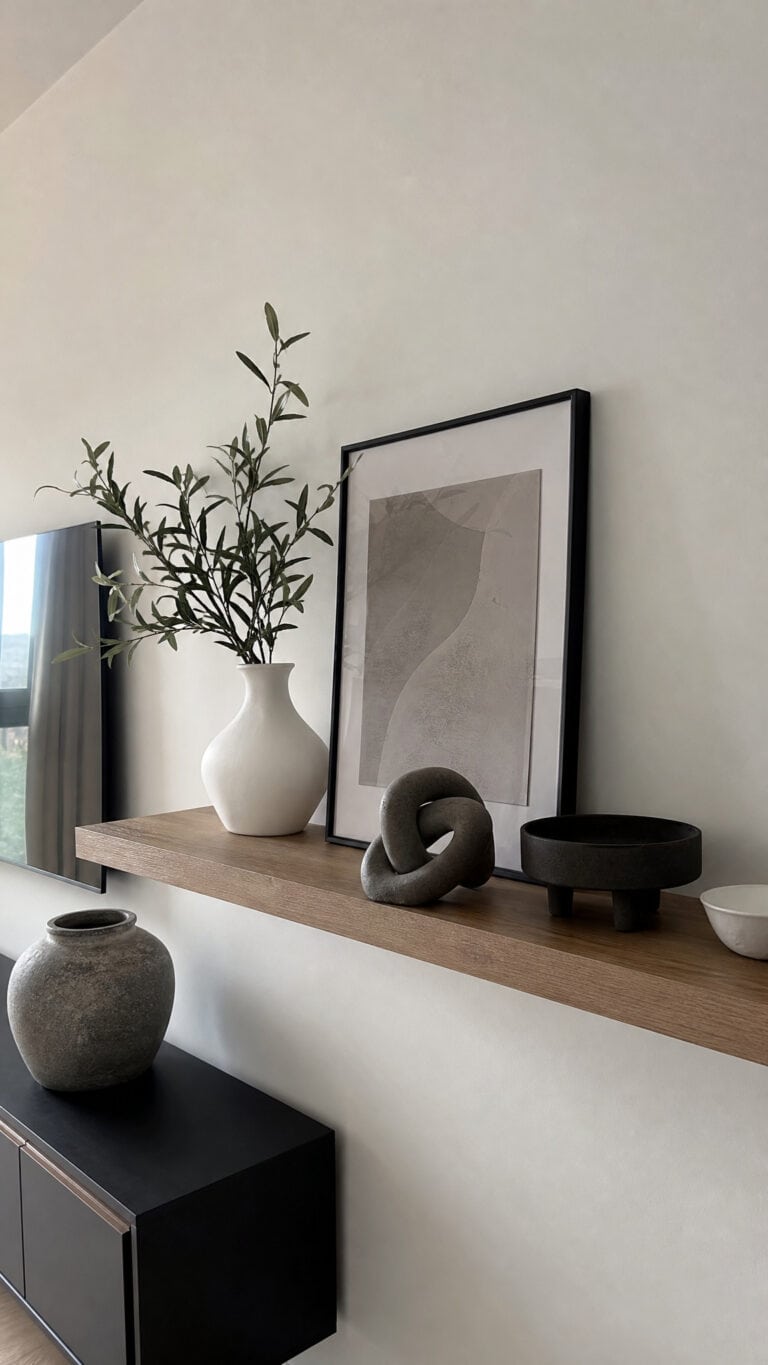
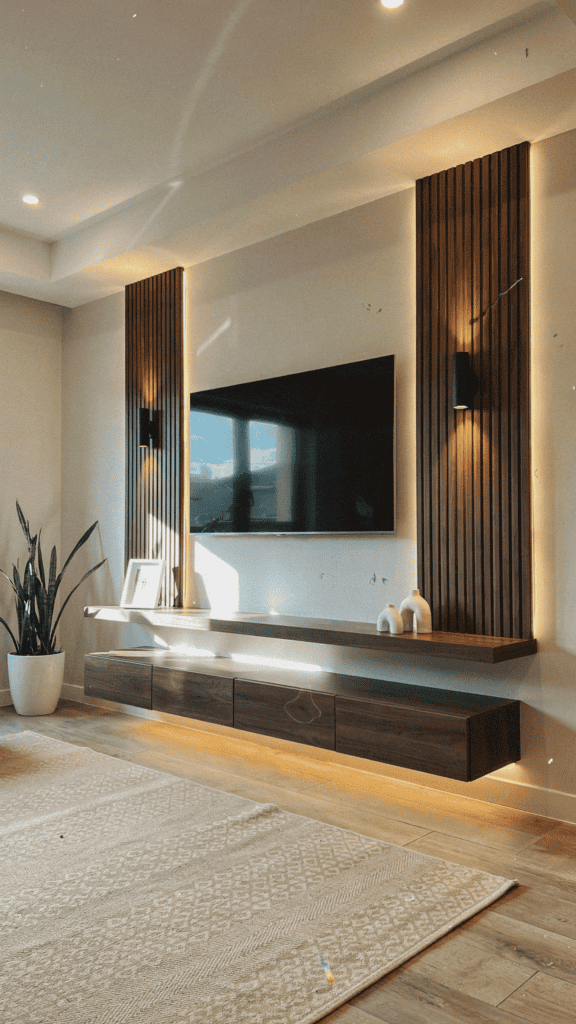
I love turning a simple media area into a stylish focal point, and I always build mine around a modern floating TV wall panel that neatly conceals wires while adding a sleek, design-forward backdrop that elevates the entire living room.
After redesigning our space three times (yes, THREE), I’ve cracked the code on creating a living room TV wall that’s both gorgeous and basically indestructible, and I’m spilling all my secrets today.
Why I’m Obsessed with 2026 TV Wall Trends as a Mom of Three Wild Boys
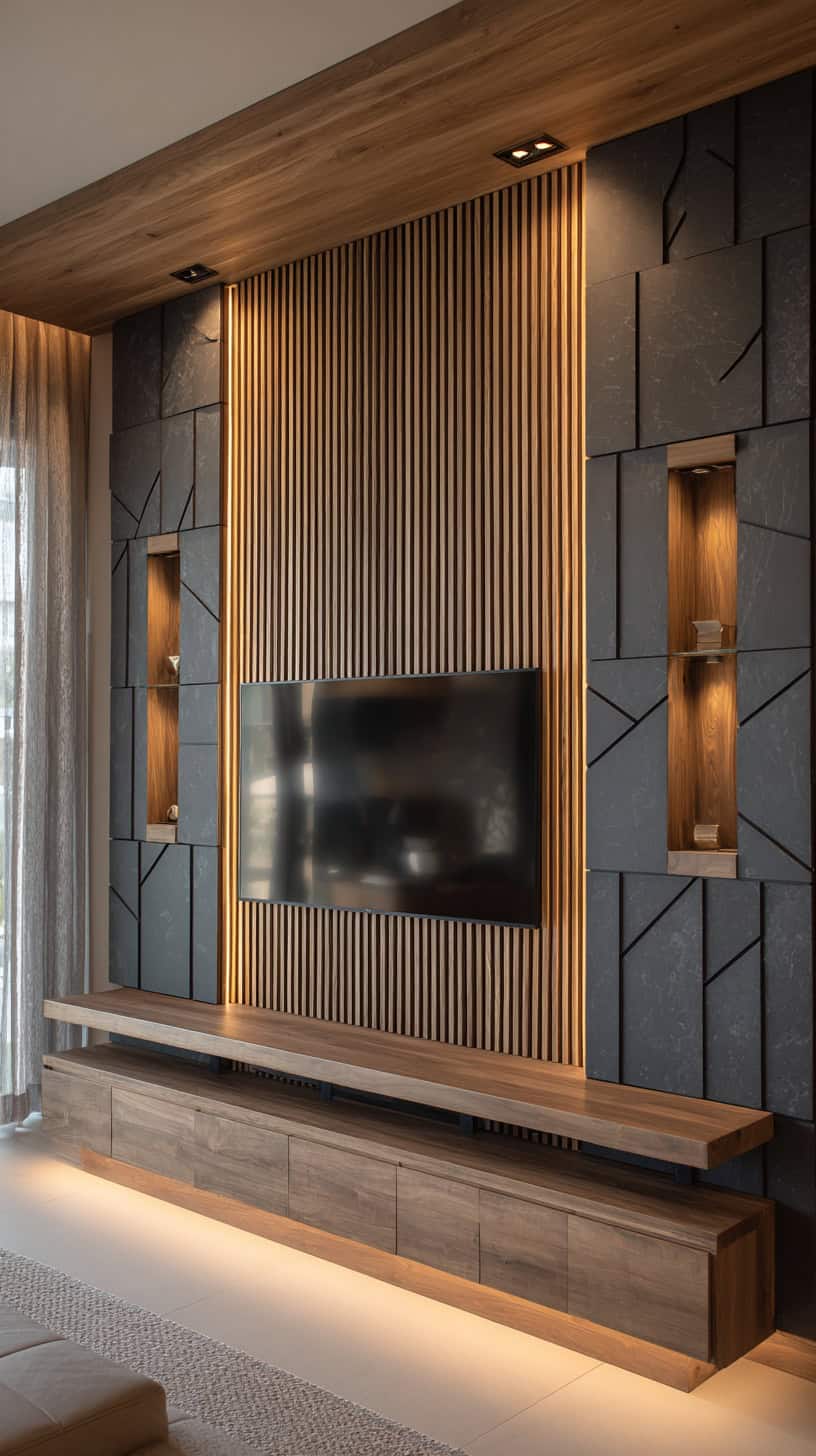

Honestly, 2026 is blowing my mind with TV wall trends that actually make sense for real families. Gone are the days of those flimsy floating shelves that couldn’t hold a feather, let alone survive my eight-year-old’s ninja kicks. The latest TV Wall Design Ideas are all about integrated systems that hide cables (hallelujah!), built-in storage that doubles as a fortress against sticky fingers, and materials that can handle whatever life throws at them.
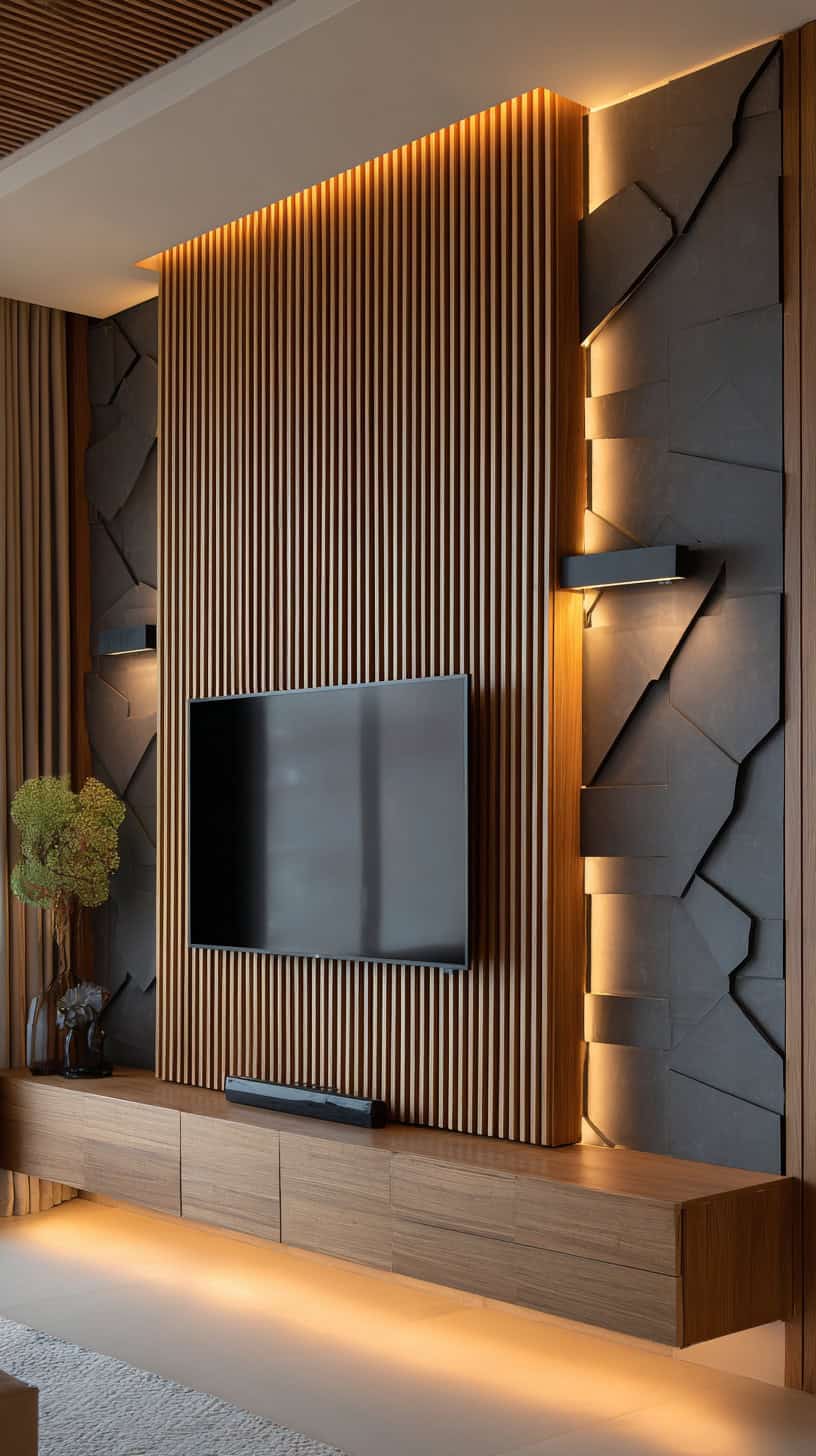
What I’m seeing everywhere—and actually loving—are textured wall panels that add dimension without adding clutter. Think wood slats, 3D geometric panels, and natural stone veneers that create this incredible backdrop for your screen. The genius part? These textures disguise fingerprints and smudges like magic. My middle son tested this theory extensively, and I can confirm: it works.
The color palettes in 2026 are also refreshingly practical. We’re moving away from stark white (thank goodness) toward warm neutrals, deep charcoals, and earthy tones that don’t show every speck of dust. Sage greens and terracotta accents are having a major moment, and they actually complement most TV screens beautifully while adding that cozy, Modern Living vibe everyone’s craving.
Another trend I’m absolutely here for: multifunctional TV walls that serve multiple purposes. We’re talking fireplace integration, display shelving that showcases your personality, and even fold-down desks for homework time. Because let’s face it, our living rooms aren’t just for watching movies anymore—they’re command centers for family life.
Top Modern Tv Wall Units That Are Kid-Proof and Super Sleek
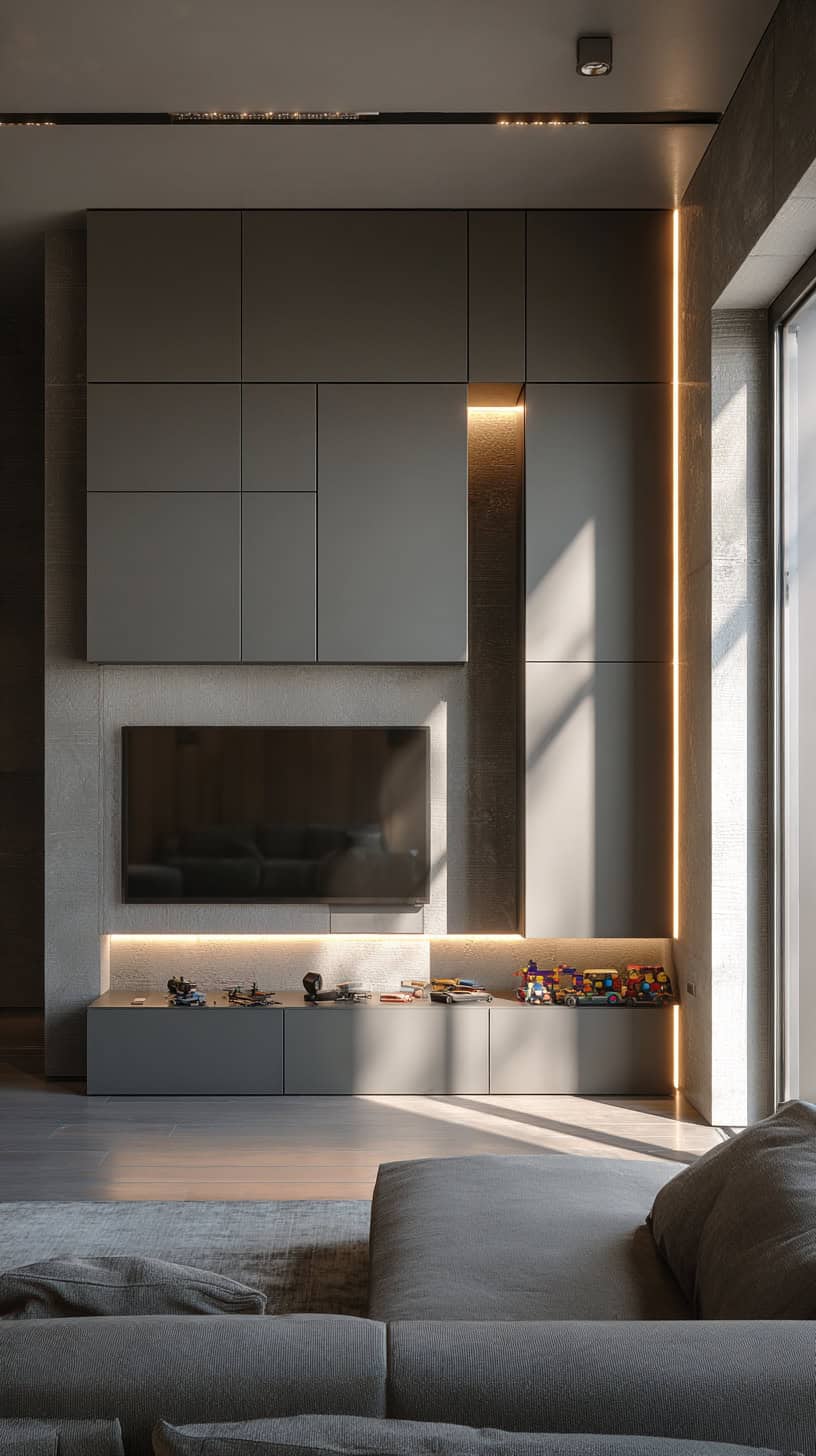
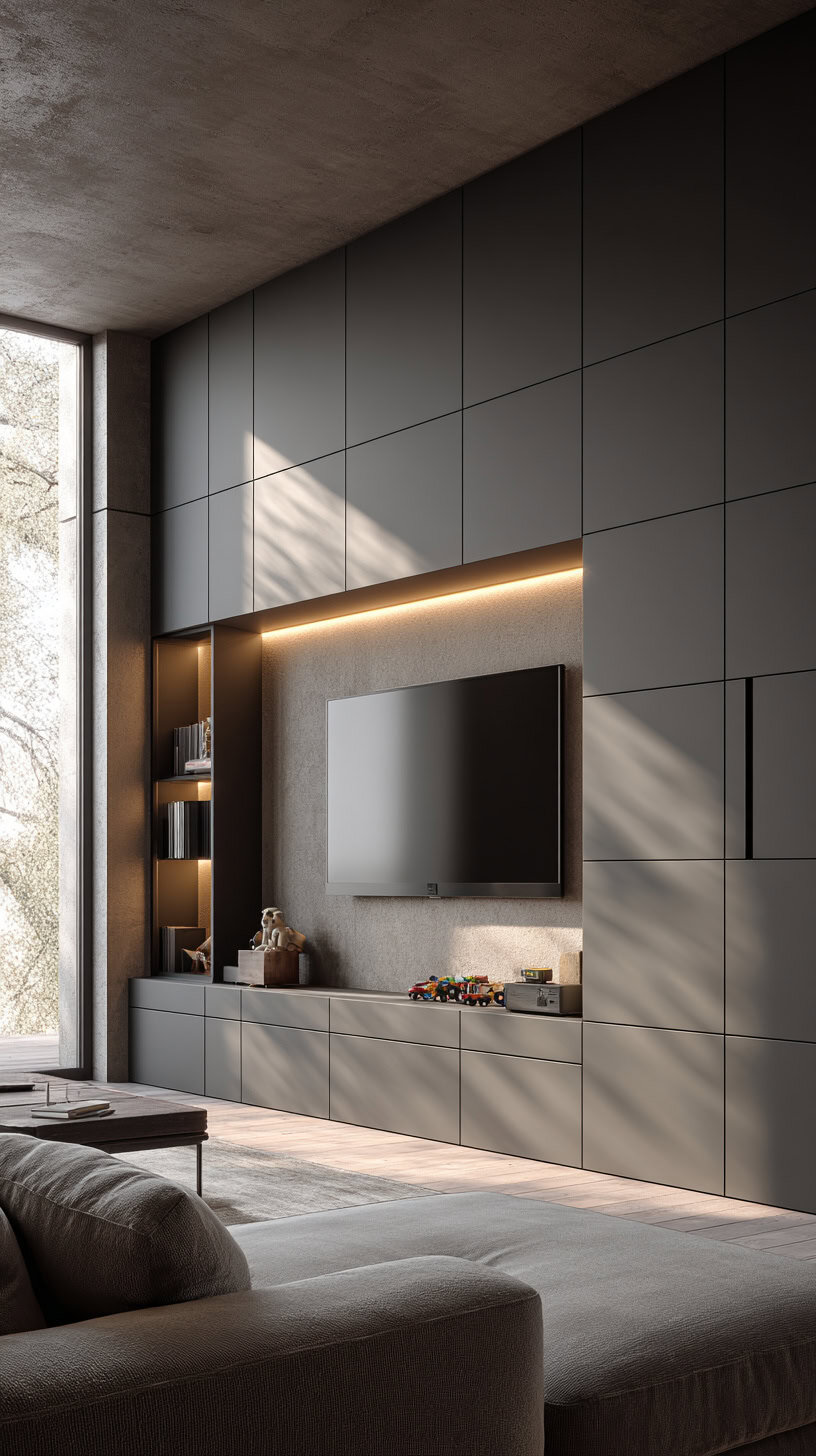
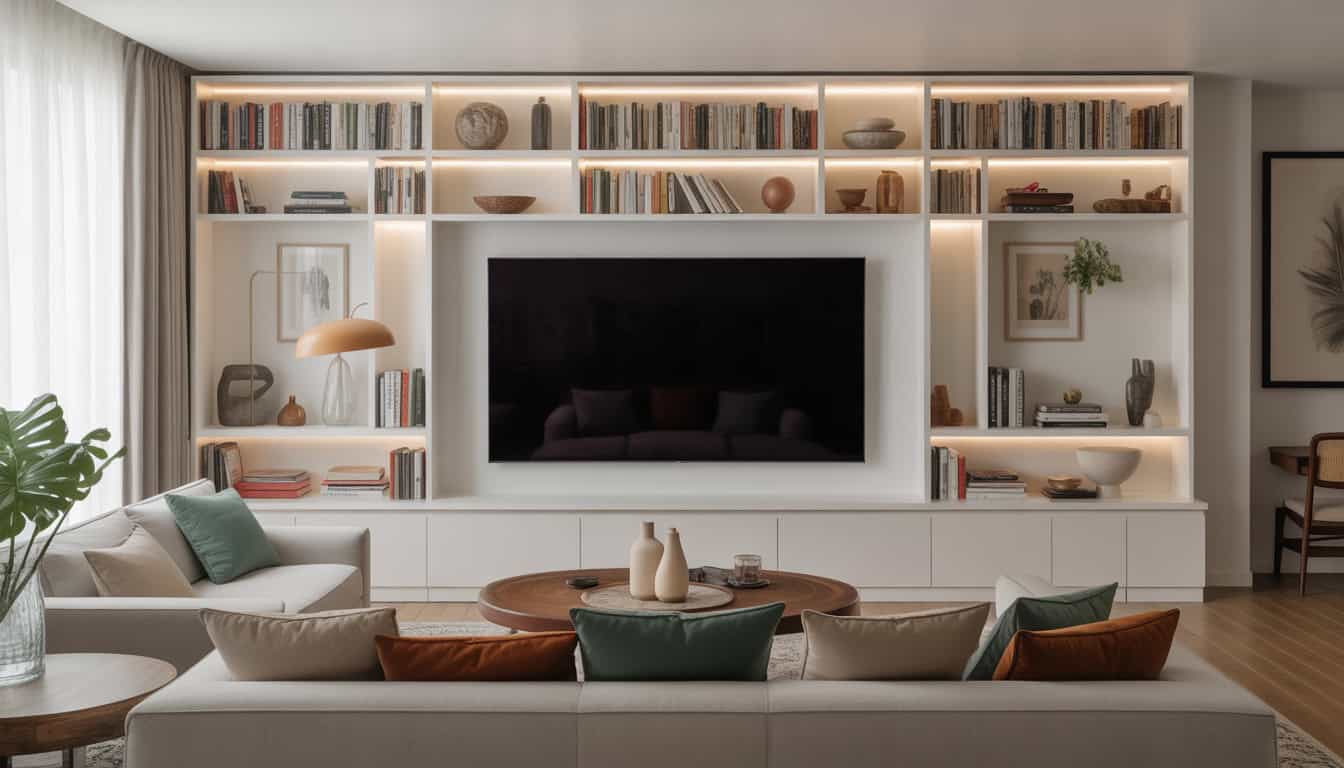
After extensive research (and by research, I mean three boys stress-testing everything), I’ve identified the Modern Tv Wall Units that can handle real life while looking like they belong in a design magazine. First up: floor-to-ceiling built-ins with soft-close drawers. These babies are game-changers because there’s literally nowhere for toys, remotes, or mystery crumbs to fall behind.
The modular wall systems are my personal favorite because you can reconfigure them as your needs change. Started with a small TV? No problem—these units grow with you. Kids finally moved out? (I’m not there yet, but I dream.) You can rearrange the components. Most come in matte finishes that resist fingerprints, and the closed storage compartments mean you can shove everything out of sight when unexpected guests show up.
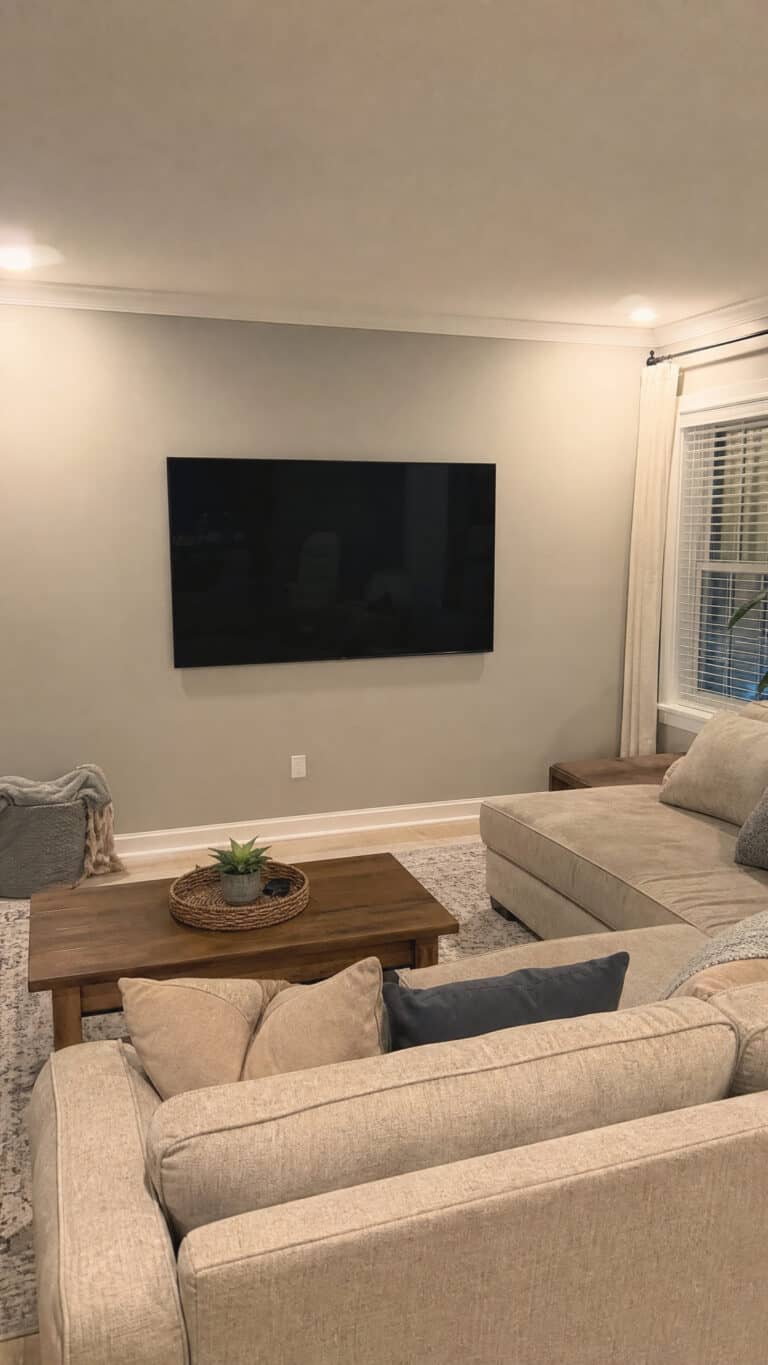
Floating Tv Unit Design options have evolved tremendously. The new generation features reinforced mounting systems that can support up to 150 pounds. I mounted ours to studs with heavy-duty brackets, and it hasn’t budged despite my youngest treating it like a jungle gym (which I obviously don’t recommend, but you know, reality). Look for units with rounded corners—trust me on this one. Sharp corners and running children are a recipe for tears.
The Scandinavian-inspired units with clean lines and natural wood are having their moment, and for good reason. They bring warmth without visual clutter, and the light wood tones make your space feel bigger. Pair these with hidden LED backlighting for that high-end look without the high-end price tag. You can literally buy LED strips for under twenty bucks and create an ambiance that looks like you hired a professional designer.
For those dealing with smaller spaces, consider wall units with sliding panels that can conceal your TV when not in use. These are brilliant for open-concept homes where you want your living area to feel like an actual living space, not just a TV shrine. Plus, sliding panels protect your screen from flying toys—just saying.
Luxury Media Wall Ideas on a Real Mom’s Budget
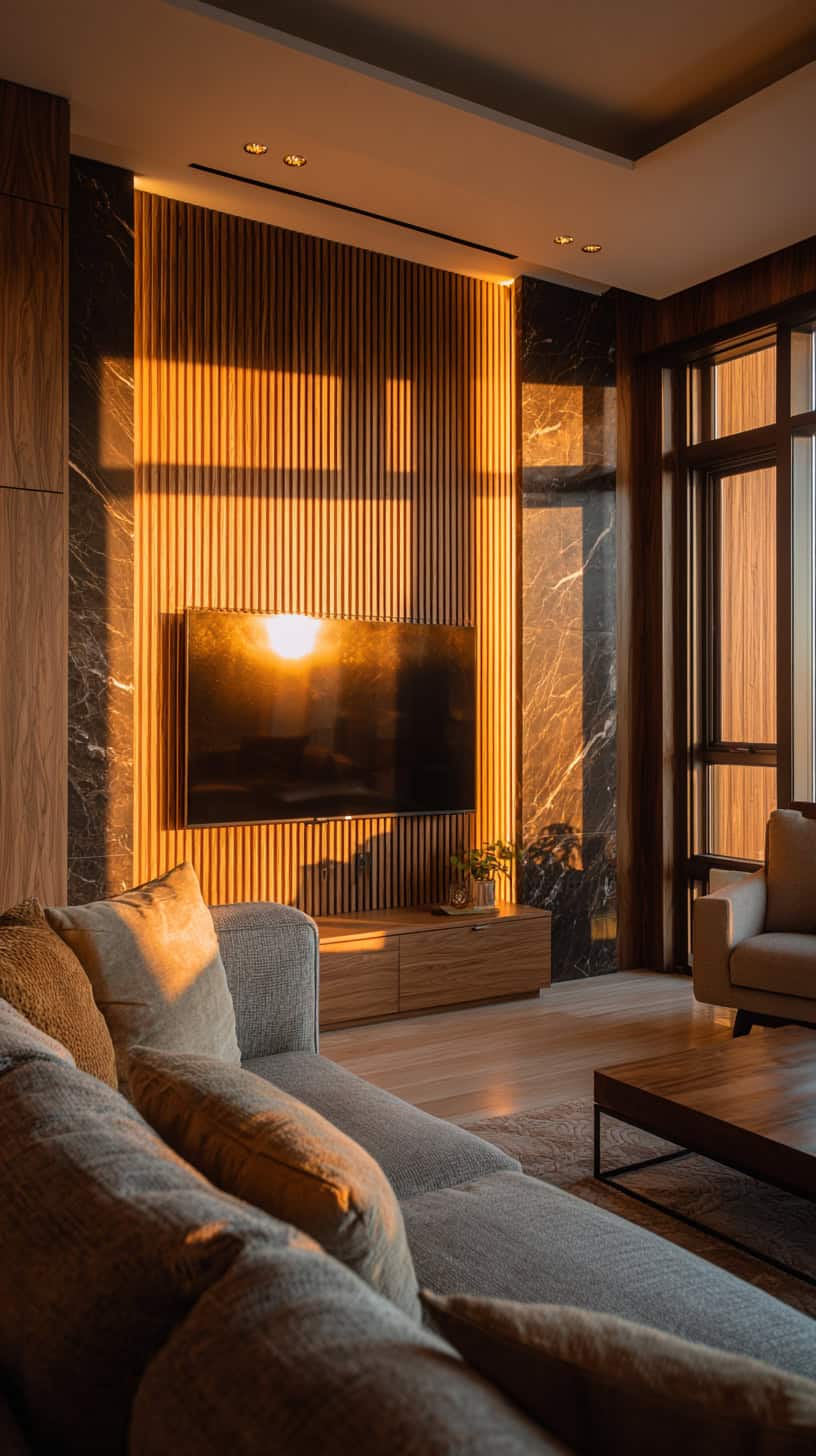
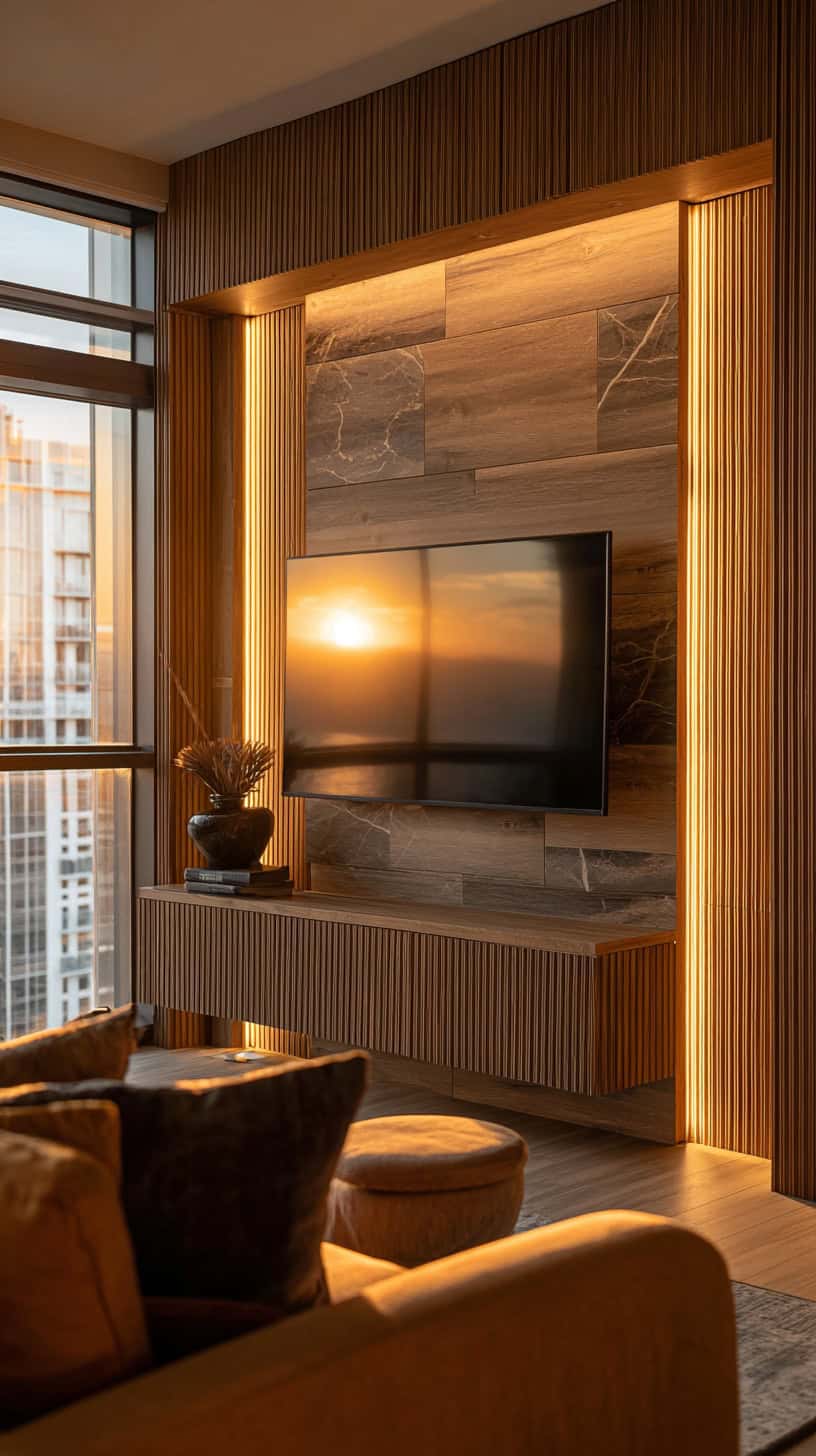
Here’s the truth bomb: Luxury Media Wall Ideas don’t actually require luxury budgets. I created our “expensive-looking” media wall for under $800, and people constantly ask who our designer was. (It was me, at midnight, fueled by coffee and determination.) The secret is knowing where to splurge and where to save.
Start with your backdrop. Instead of real marble or stone (which costs a fortune), use peel-and-stick panels or luxury vinyl planks applied vertically. I used wood-look vinyl planks from the hardware store, and they created this stunning accent wall for about $150. Nobody can tell the difference unless they’re literally pressing their nose against it, and even then, they’re impressed by how realistic it looks.
Lighting is where you get the biggest bang for your buck. Install recessed LED strips behind your TV and along the edges of built-in shelves. This creates depth and drama that makes your setup look professionally designed. I spent maybe $60 on smart LED strips that I can control with my phone, changing colors based on mood or season. My boys love the gaming mode with blue lighting, while I prefer warm amber for movie nights.
Here’s my favorite budget hack: mix high and low. Invest in one beautiful statement piece—maybe a gorgeous console table or a unique wall shelf—and surround it with affordable finds. I scored an incredible mid-century console at a thrift store for $45, refinished it for another $30, and anchored our entire media wall around it. Everything else? IKEA hacks and DIY solutions.
Crown molding and trim work elevate everything instantly. You can buy pre-cut pieces at home improvement stores and install them yourself with a miter saw (or have them cut at the store). Paint everything—the trim, shelving, and wall panels—in coordinating colors for a custom built-in look. This technique alone made our basic setup look like we spent thousands when we actually spent hundreds.
Don’t underestimate the power of strategic styling. Display meaningful items, books arranged by color, and plants (fake ones work great if you’re plant-challenged like me). These elements draw the eye around the entire wall, not just to the TV, creating that curated, luxurious feel without spending a dime.
Living Room Partition Magic with Tv Panel Design
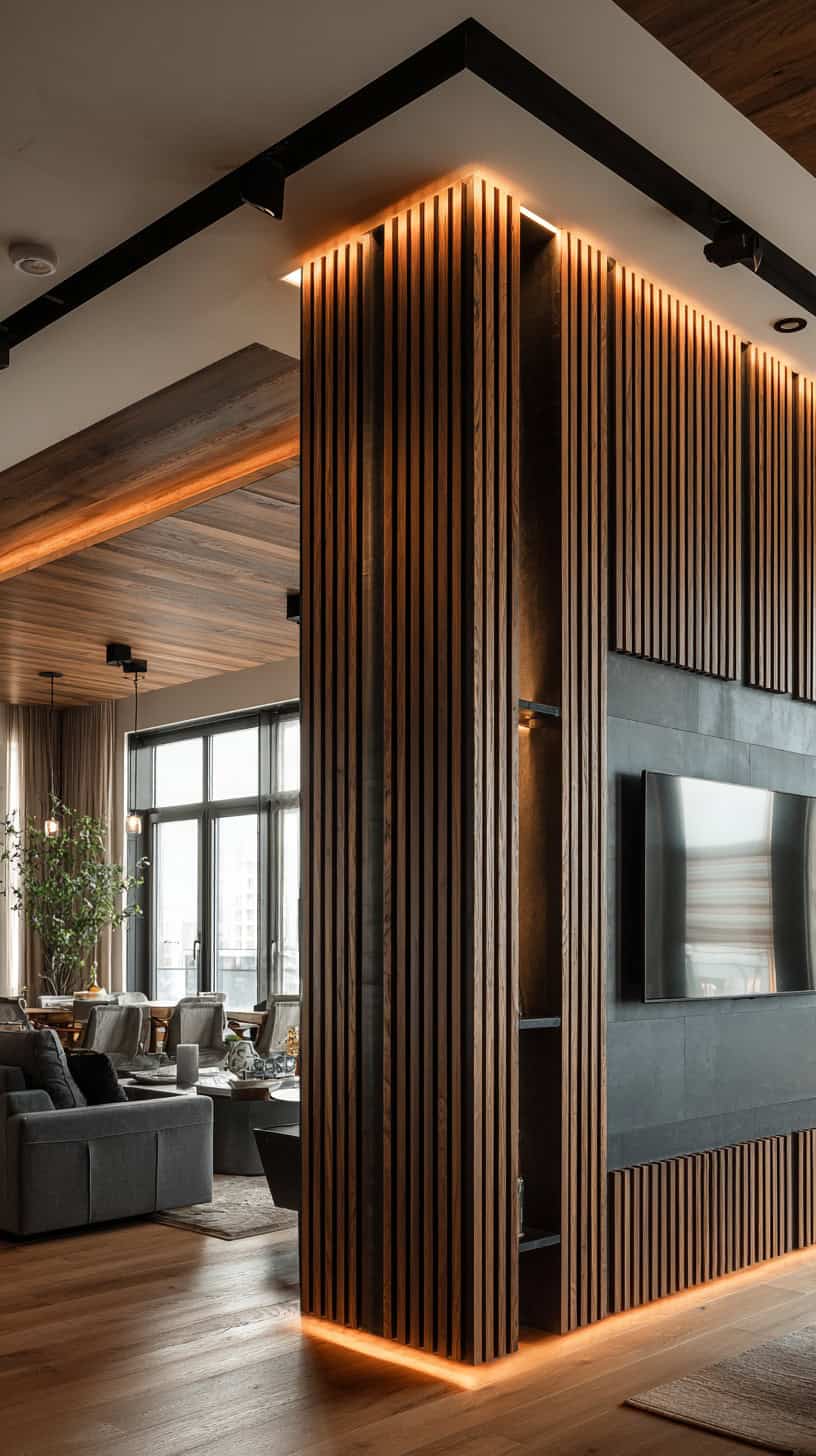
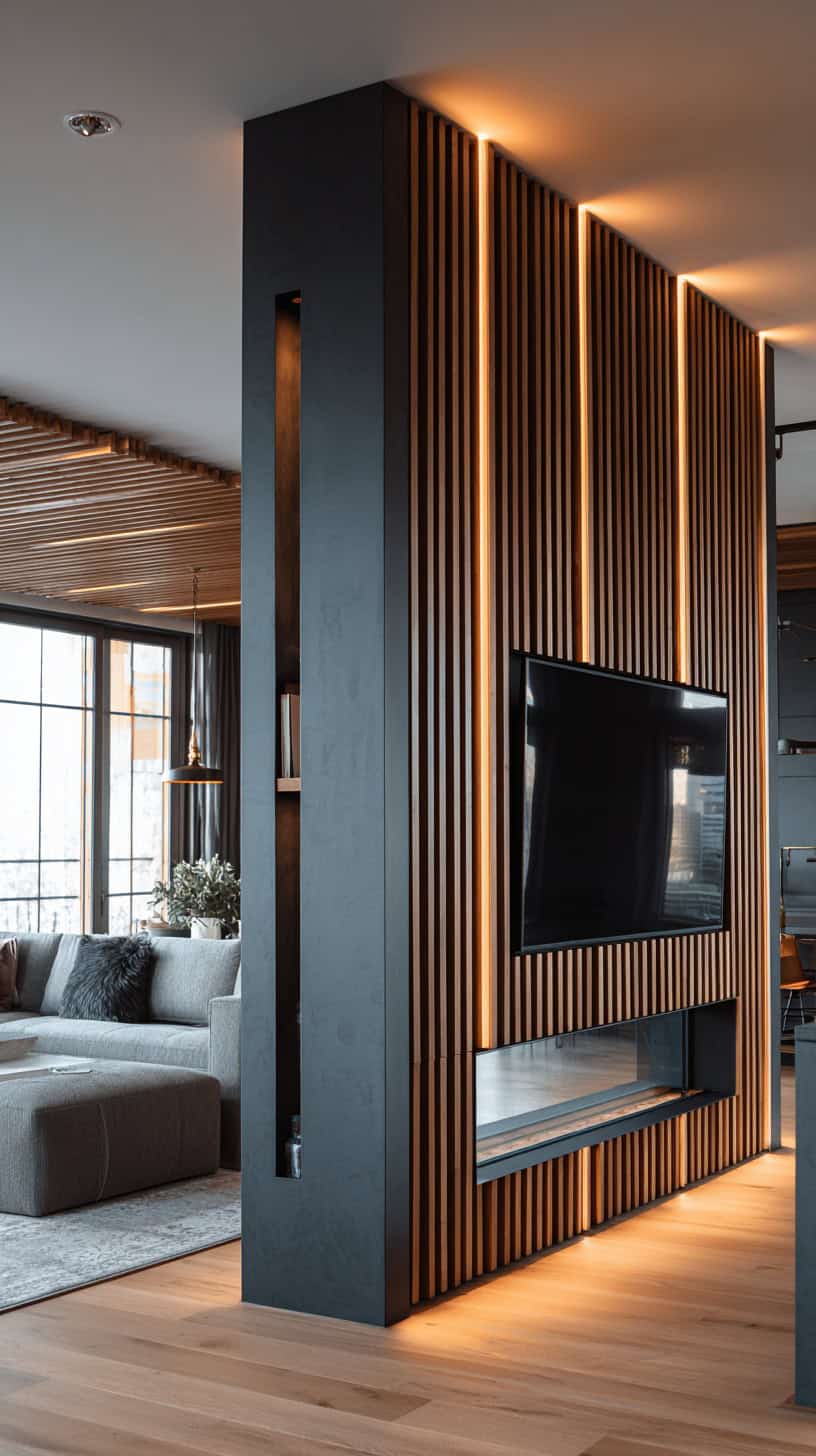
Open floor plans are amazing until you realize your entire house feels like one giant room. This is where Living Room Partition strategies using your TV wall come in clutch. I transformed our space by using the Tv Panel Design as a functional room divider that defines zones without closing off the area completely.
The double-sided TV wall unit is pure genius if you’ve got the space and budget. These create separation between, say, your living area and dining space, while providing storage and functionality on both sides. You can DIY a simplified version using a bookshelf-backed TV unit—one side displays your entertainment setup, while the other holds dishes, books, or whatever you need for the adjacent space.
Slatted panels extending beyond your TV create visual separation while maintaining that open, airy feeling. We installed floor-to-ceiling wood slats on either side of our TV that extend about two feet out into the room. This subtle division helps define the TV-watching zone from the play area without making the space feel cramped. Plus, the slats add architectural interest that photographs like a dream.
Another brilliant partition trick: use your TV wall as part of a half-wall system. Build out from your existing wall about three or four feet, mount your TV on one side, and add open shelving on the other. This creates a natural walkway behind the seating area while giving you tons of extra storage. My husband was skeptical about this project, but now he brags about it to everyone who visits.
Consider incorporating different materials on each side of your partition wall. The TV side might feature sleek wood panels or stone, while the opposite side sports a different texture or color that suits the adjacent space. This helps each zone feel intentional and designed rather than accidentally divided.
Practical tip from the trenches: if you’re using your TV wall as a partition, make absolutely sure you’ve planned your cable management and electrical outlets for both sides. We learned this the hard way and had to snake cables through some creative pathways. Learn from my mistakes and map everything out before building!
Tv Wall Inspiration from 2026’s Hottest Trends
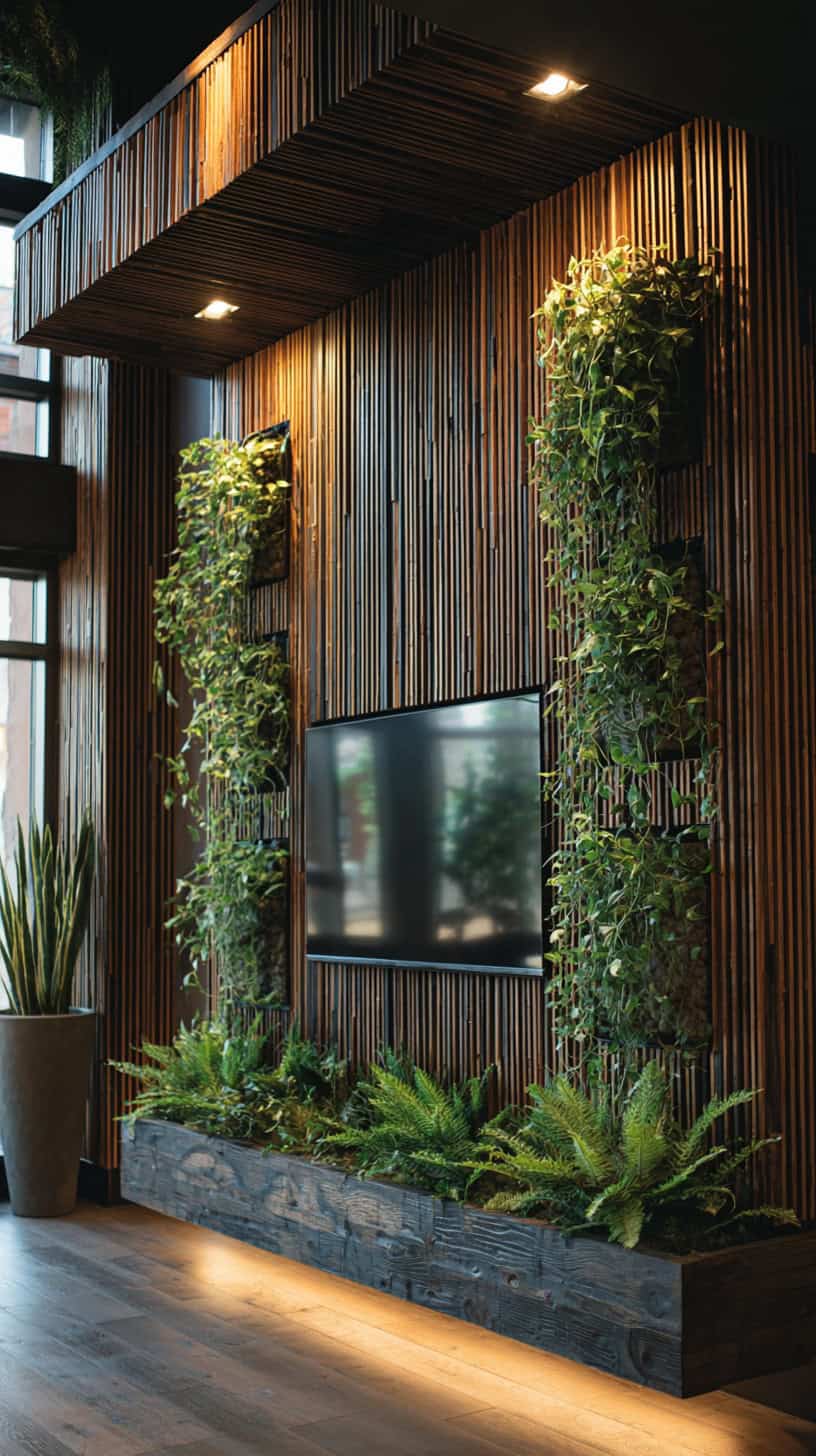
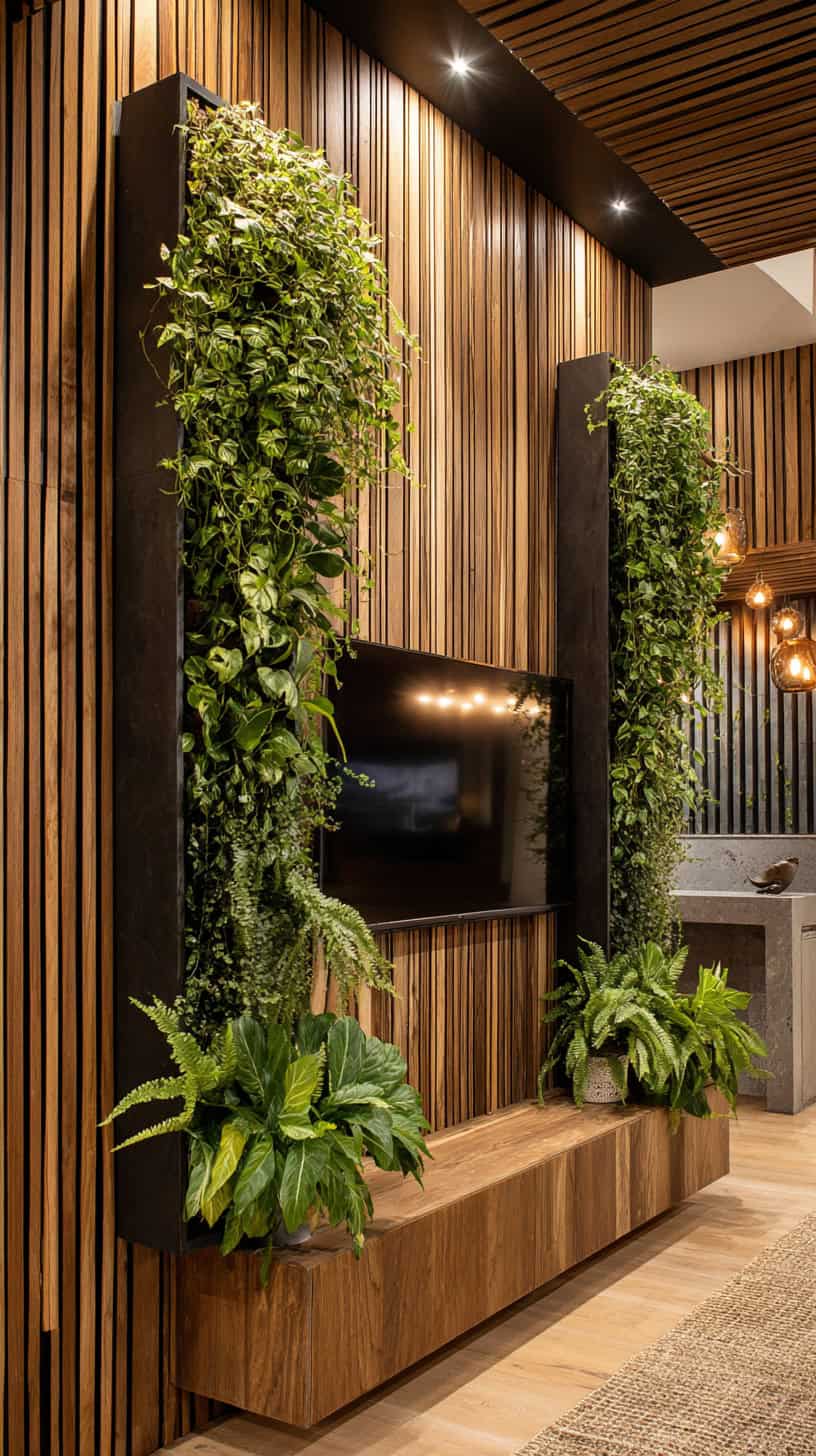
Scrolling through design feeds for Tv Wall Inspiration has become my guilty pleasure (don’t judge—we all have our vices). The trends emerging in 2026 are bringing together technology, sustainability, and serious style in ways that actually work for regular people, not just influencers with unlimited budgets.
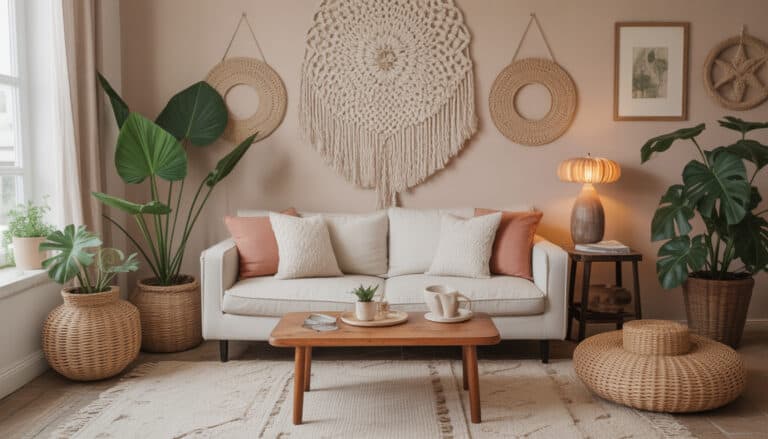
Biophilic design is everywhere right now, and I’m obsessed. This means incorporating natural elements into your TV wall design—think living plant walls flanking your screen, natural wood textures, stone accents, and organic shapes. I installed simple floating shelves on either side of our TV and loaded them with pothos plants (super low-maintenance) that cascade down beautifully. The greenery softens the technology and makes the whole space feel alive.
The maximalist gallery wall approach is making a comeback, but with a twist. Instead of the traditional scattered photo arrangement, we’re seeing curated collections arranged in grids or geometric patterns around the TV. This actually works beautifully because it integrates your screen into the overall design rather than making it the sole focus. I created a salon-style arrangement with family photos, artwork, and decorative objects that makes our TV feel like part of a larger story.
Smart home integration is becoming seamless and subtle. Hidden speakers built into wall panels, motorized screens that descend from ceiling beams, and touch-activated lighting are all becoming more accessible. While I haven’t gone full smart home (yet), I did install voice-controlled LED lighting that the kids think is absolutely magical. “Alexa, movie time!” dims the lights and changes them to warm amber—instant theater vibes.
Textured concrete and industrial elements are trending hard, especially for modern and transitional spaces. Faux concrete panels give you that high-end urban loft feeling without the actual concrete weight and cost. Pair these with warm wood tones and brass accents to keep things from feeling too cold or sterile. My neighbor did this combination, and it’s absolutely stunning—industrial edge with cozy warmth.
Mixed material combinations are also huge right now. Don’t be afraid to combine wood, metal, glass, and stone in your TV wall design. The key is choosing elements with complementary tones. For example, warm wood with brass or copper accents, or cool-toned stone with brushed nickel and glass shelving. These combinations create visual interest and depth that makes your wall look custom-designed.
Budget-Friendly Living Room Tv Designs You Can Build Yourself
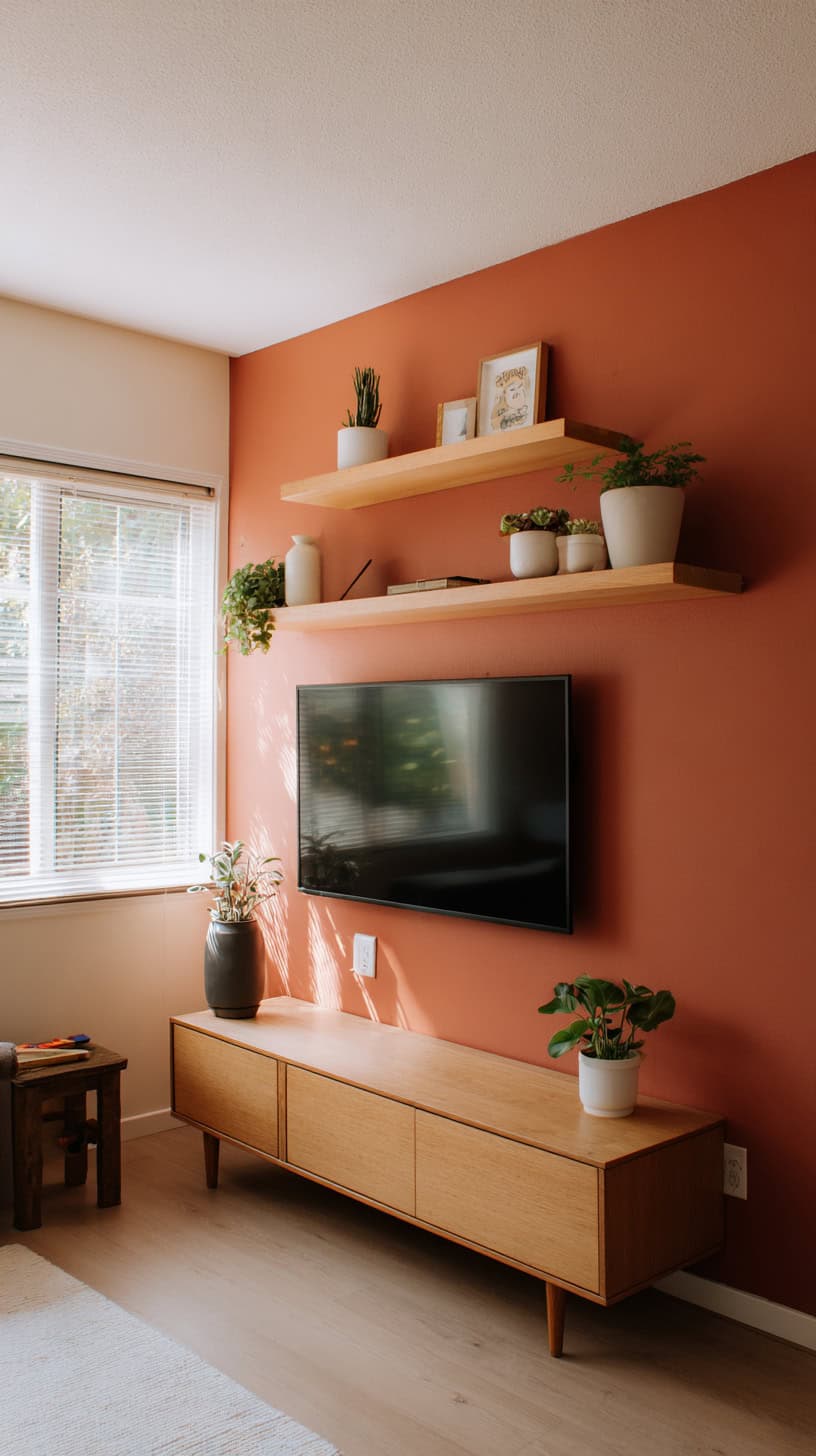
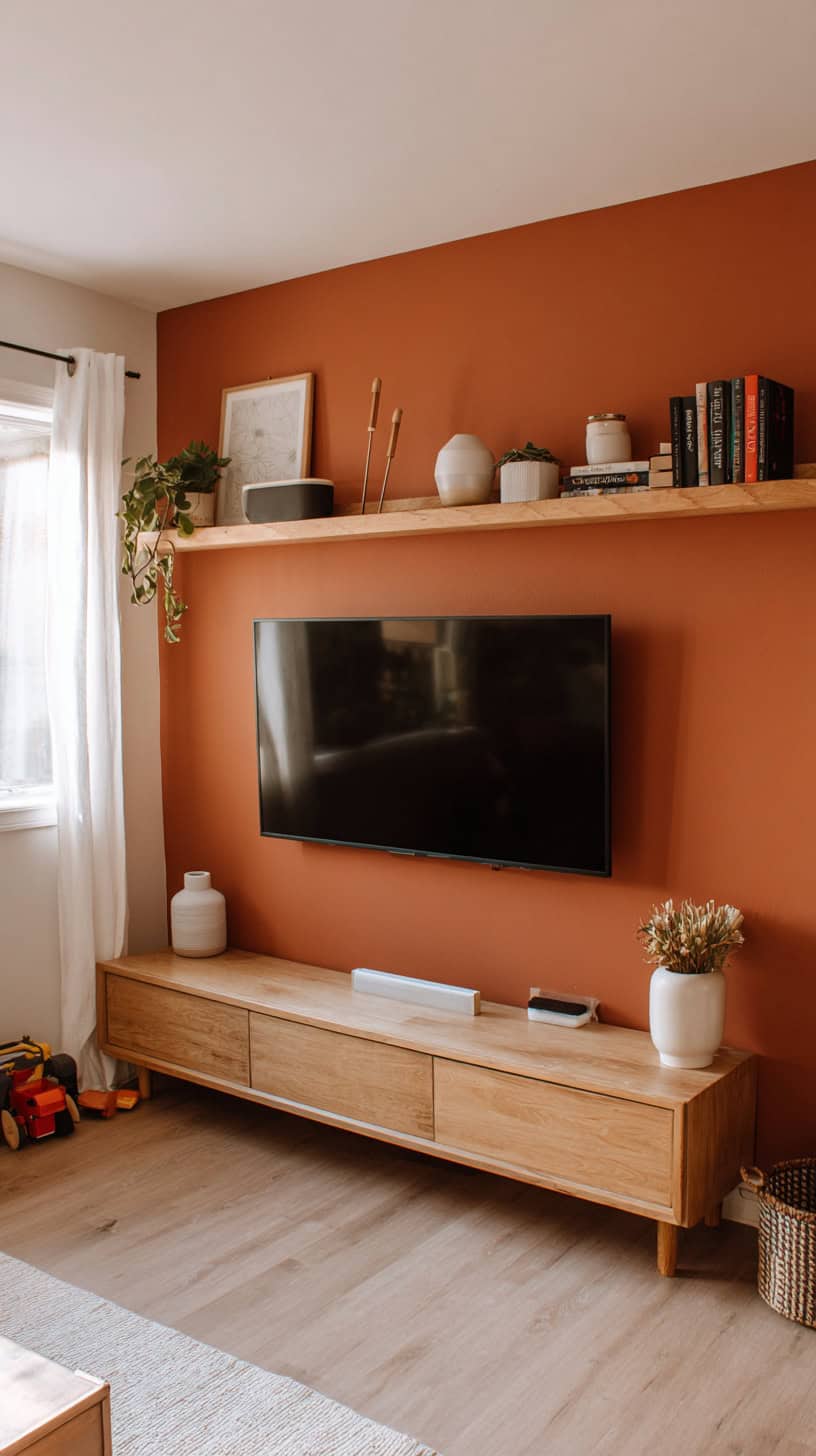
Rolling up your sleeves and creating your own Living Room Tv Designs is so much more satisfying (and affordable) than you’d think. I’m not talking about needing expert carpentry skills here—if I can do it while preventing three boys from painting the dog, you can absolutely handle these projects.
The easiest DIY TV wall starts with a simple accent wall. Paint or wallpaper the wall behind your TV in a contrasting color or pattern. This immediately makes your TV area feel intentional and designed. I used peel-and-stick textured wallpaper that looks like grasscloth, and it took me one afternoon and cost $120 for the entire wall. No special skills required, and it completely transformed the space.
Building your own floating shelves is shockingly simple and creates that custom built-in look. Get lumber cut to size at the hardware store (they’ll do this for free), stain or paint them, and mount them with heavy-duty floating shelf brackets. I created an entire shelving unit around our TV for under $200 in materials. YouTube videos walked me through every step, and now I feel like a construction genius.
The IKEA hack route is perfect for budget-conscious DIYers. Take basic IKEA units (Besta is the MVP here) and customize them with new fronts, legs, or hardware. Add crown molding on top, and suddenly your $300 IKEA purchase looks like a $3,000 custom unit. I’ve done this twice now, and both times, guests have asked for my contractor’s number. (Plot twist: I am the contractor.)
Pallet wood projects are incredibly trendy and practically free if you can source pallets from local businesses. Create a rustic shiplap-style backdrop by disassembling pallets, sanding the boards, and installing them horizontally behind your TV. Seal them properly (important with kids!), and you’ve got a farmhouse-chic media wall for the cost of sandpaper and wood stain. This project took me a weekend, and the compliments have lasted for years.
Here’s a pro DIY tip: always anchor everything to wall studs. Use a stud finder (about $20), mark your studs, and use appropriate hardware for the weight you’re mounting. With three boys who think furniture is climbing equipment, I’ve learned that proper anchoring is non-negotiable. Safety first, design second—but you can have both!
Modern Living Hacks with Living Room Wall Designs
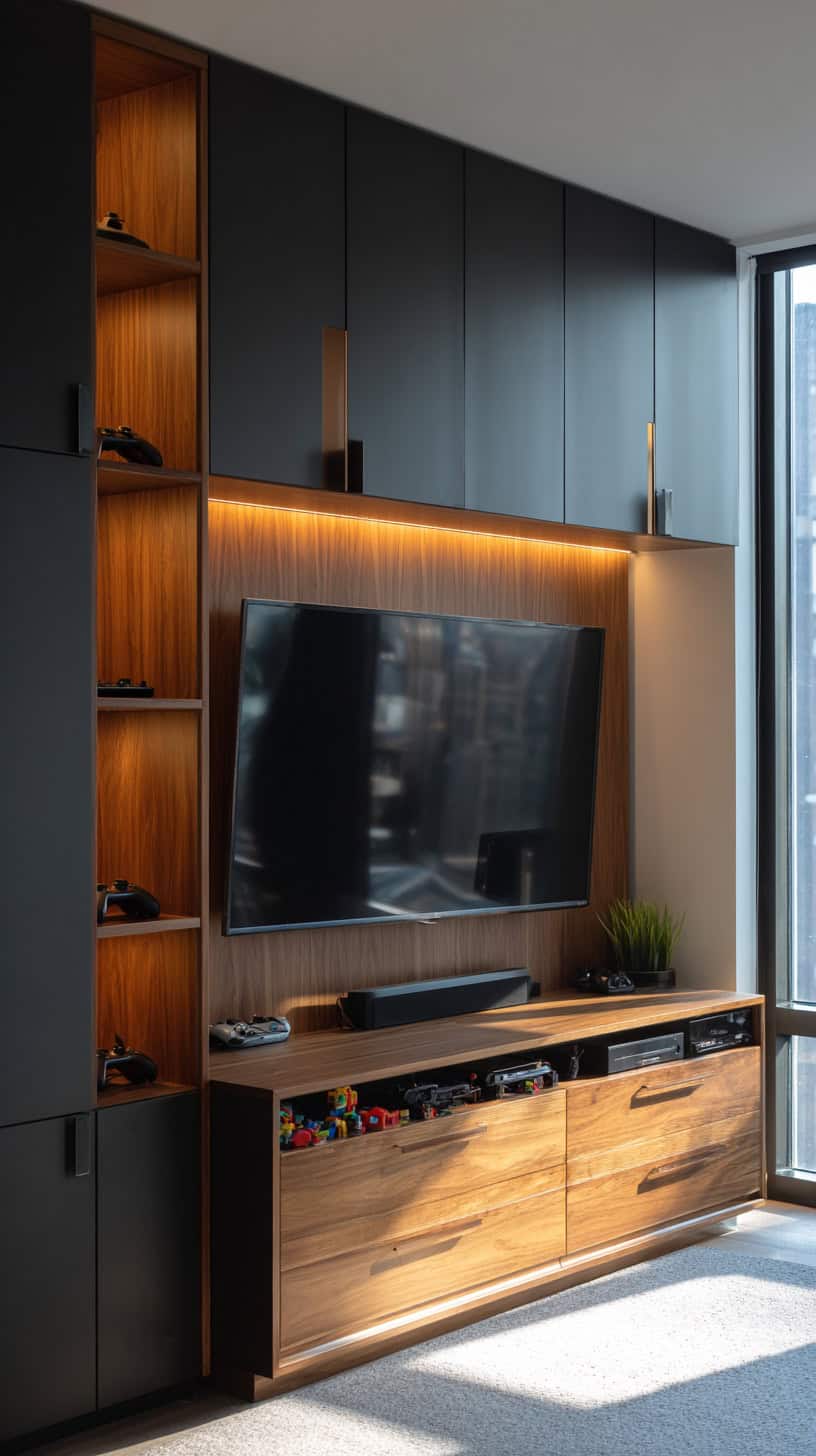
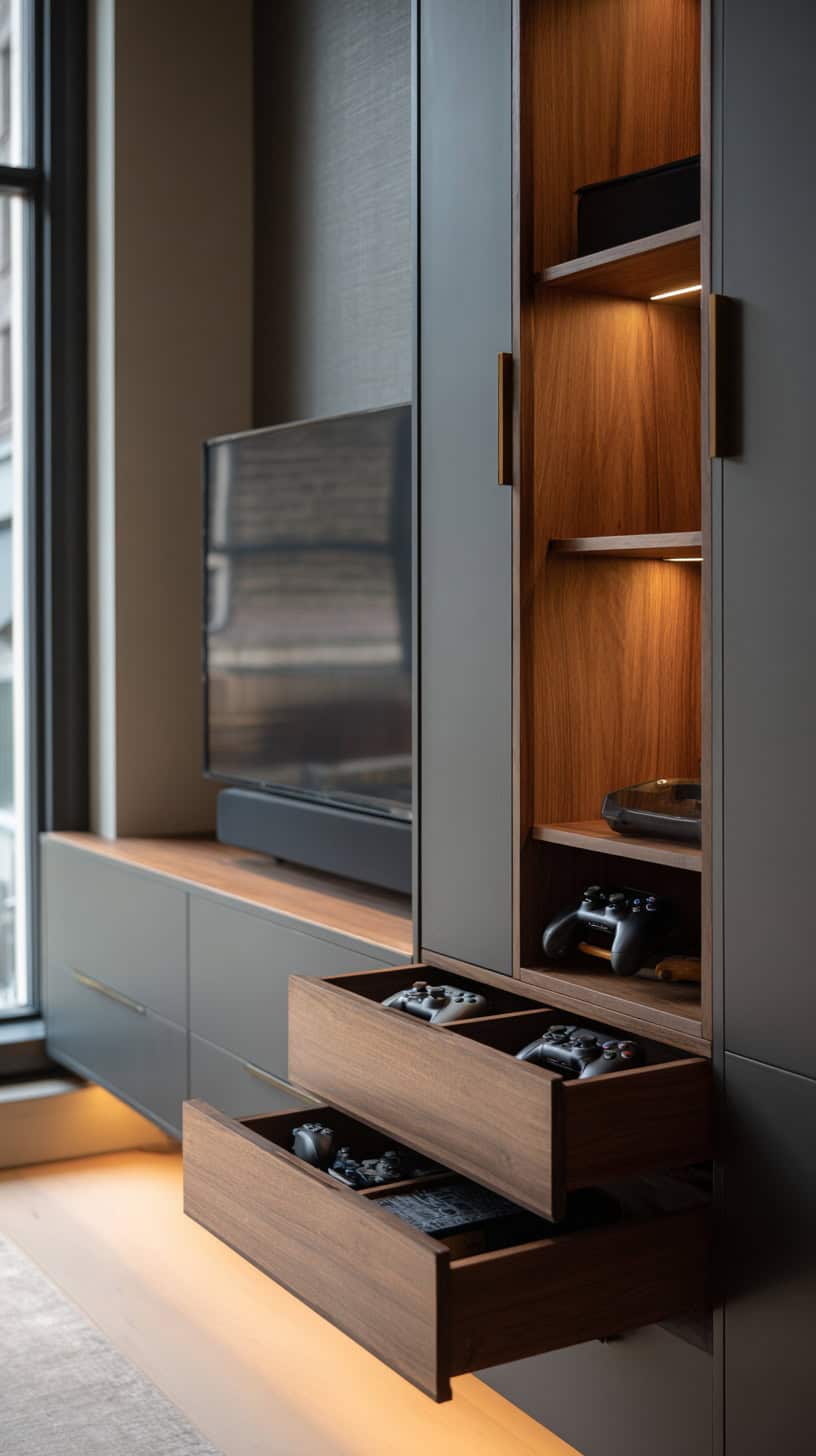
Creating a functional, beautiful space that supports actual Modern Living requires some clever Living Room Wall Designs that work as hard as you do. These are the practical hacks that have saved my sanity and kept our living room looking presentable even during the chaos of daily life.
First hack: hidden storage is everything. Build or buy TV units with tons of closed storage so you can quickly sweep clutter out of sight. We installed cabinets below our TV with pull-out drawers that hide gaming controllers, remote controls, chargers, and all the random stuff that accumulates. Guests see a clean, minimalist wall; they don’t see the organized chaos tucked away.
Cable management will change your life—I’m not being dramatic. Use cable raceways painted to match your wall, or if you’re renovating, run cables through the walls properly. Nothing ruins a beautiful TV wall faster than a tangled mess of wires. I spent one Saturday afternoon organizing our cables with velcro ties and conduits, and it still makes me happy every time I look at it.
Incorporate charging stations into your TV wall design. We installed a cabinet with built-in power strips where all devices live and charge overnight. This means no more “Mom, where’s my tablet?” emergencies and no more cables snaking across the floor. Drill a hole in the back of a cabinet, thread a power strip through, and boom—hidden charging station.
Multi-purpose furniture is a game-changer in modern living. Our TV console doubles as a toy storage bench with cushions on top for extra seating. Ottoman coffee tables with storage inside hold blankets and pillows. Every piece in our living room serves at least two functions, which means we maximize space without sacrificing style.
Here’s a brilliant hack I discovered accidentally: use picture ledges instead of deep shelves around your TV. These take up less visual space while still providing display opportunities. They’re also perfect for rotating seasonal decor—I can swap out items in minutes without the commitment of drilling new holes. My current setup includes family photos, small plants, and decorative objects that I change with the seasons.
Smart lighting on dimmer switches is essential for modern living. Install multiple light sources on dimmers so you can adjust the ambiance for different activities. Bright for cleaning and homework, dimmed for movie nights, and completely off when natural light is abundant. This flexibility makes your space work for every moment of your day.
Gorgeous Tv Wall Decor Design to Wow Your Guests
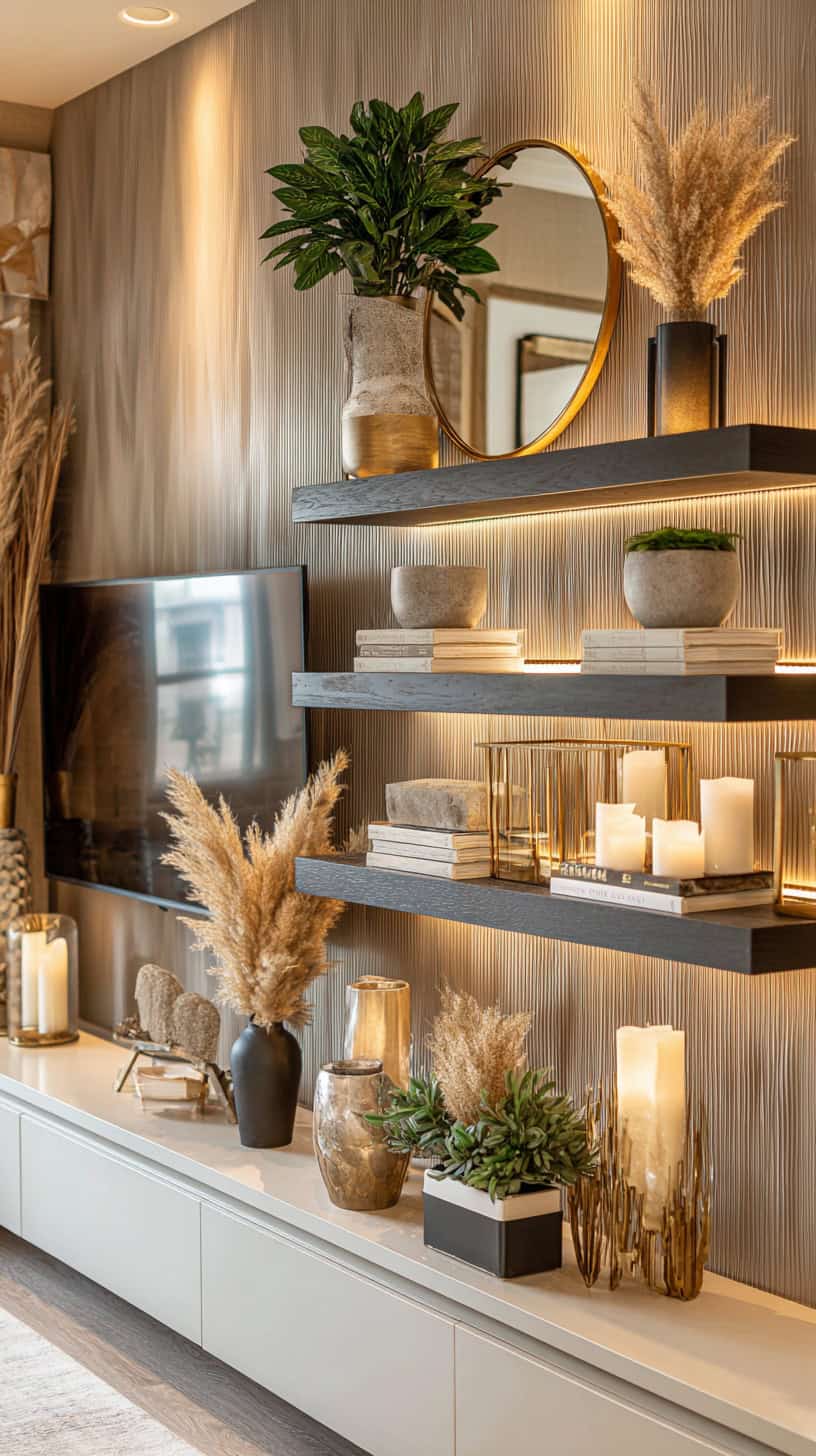
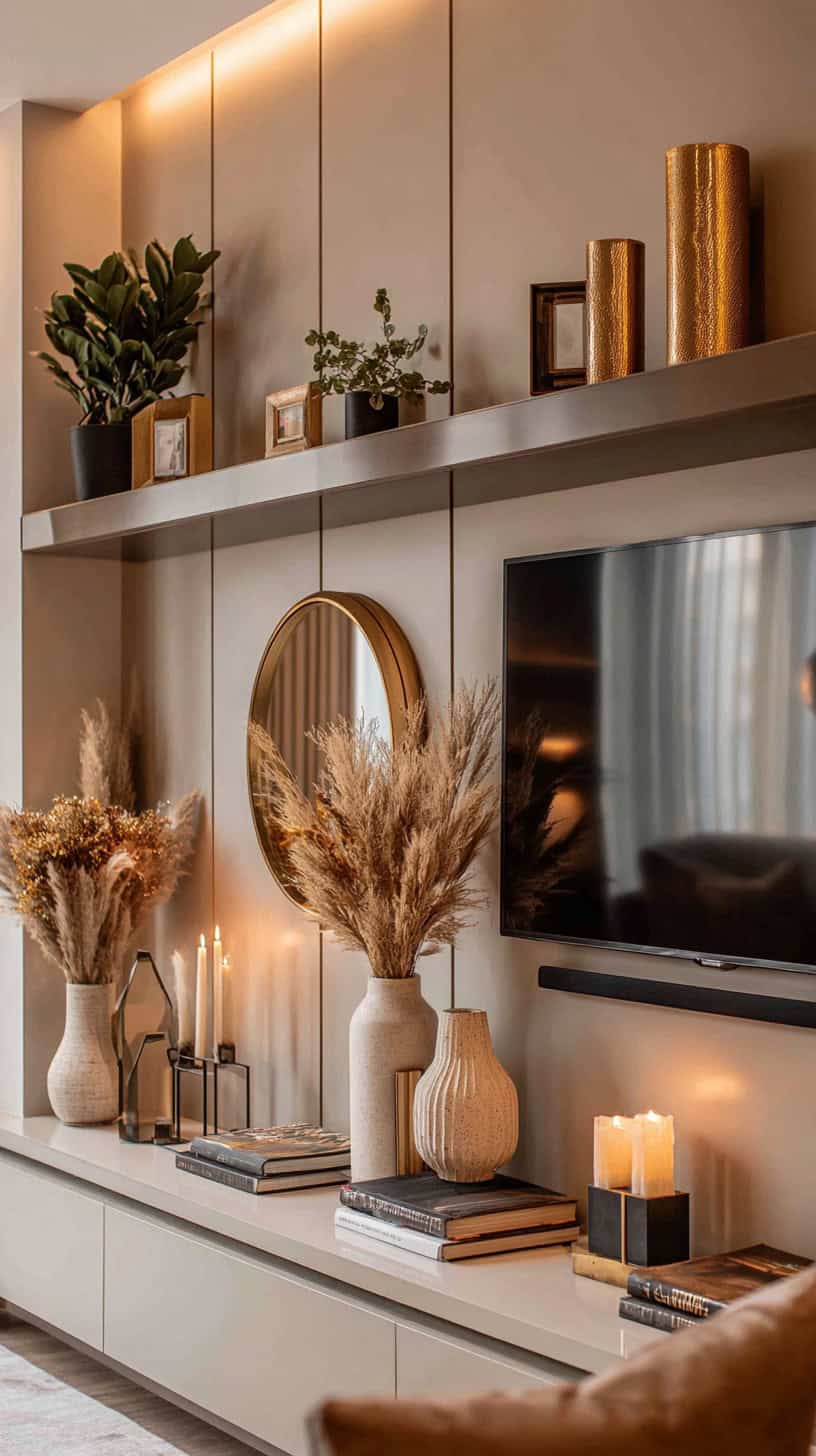
Let’s talk about creating that jaw-dropping Tv Wall Decor Design that makes people pull out their phones to take photos. This is where functionality meets pure aesthetics, and honestly, it’s the fun part where you get to show off your personality while keeping everything practical.
Layering is the secret to professional-looking decor. Start with your largest element (the TV), then layer in medium pieces (artwork, mirrors, or shelving), and finish with small accessories (plants, books, candles). This creates depth and visual interest that draws the eye around the entire wall. I arranged my elements in odd numbers—three shelves, five pieces of artwork—because this creates a more dynamic, less predictable look.
Symmetry versus asymmetry is a personal choice, but I’ve found a balanced asymmetrical approach works best in our space. The TV is centered, but the surrounding elements are artfully arranged without being perfectly matched on both sides. This feels more organic and collected over time rather than staged. However, if you love symmetry, go for it! Two identical built-ins flanking a centered TV creates a classic, elegant look that never goes out of style.
Textural variety makes everything more interesting. Combine smooth surfaces (the TV screen) with rough textures (woven baskets, chunky knit throws), shiny elements (metallic accents, glass vases), and matte finishes (painted wood, ceramic pots). This mix engages the eye and makes your space feel professionally designed. I have smooth lacquered cabinets, rough jute baskets, shiny brass hardware, and matte ceramic planters all working together in harmony.
Strategic artwork placement can make or break your TV wall. Don’t be afraid to incorporate art into your media wall—just keep it in scale and balanced. I hung two large canvas prints on either side of our TV at the same height as the center of the screen. This creates a triptych effect that makes the TV feel intentional rather than intrusive. Choose artwork colors that complement your room’s palette for a cohesive look.
Lighting as decor is absolutely crucial. Beyond functional lighting, use light as a decorative element itself. LED backlighting creates a soft glow that makes your TV appear to float. Picture lights above artwork add gallery-style sophistication. Candles (battery-operated if you have kids) add warmth and ambiance. These layers of light create different moods throughout the day and night.
The final touch that pulls everything together: personal elements that tell your family’s story. Display travel souvenirs, handmade items from your kids, vintage finds with meaning, or collections you’ve curated over time. These personal touches transform your TV wall from a showroom display into a reflection of who you are. My favorite element in our design is a shadow box containing my grandmother’s vintage TV Guide collection—it’s a conversation starter and deeply meaningful to our family.
Here’s my parting wisdom after three complete living room overhauls: your TV wall should evolve with your life. Don’t stress about getting everything perfect immediately. Start with the basics (TV mounting, essential storage), then layer in the beautiful elements over time. My media wall has grown and changed over five years, and honestly, that journey has been part of the fun. You can create something gorgeous that works for your real life, your real budget, and your real family—chaos and all. Now go make that TV wall amazing!
This post may contain affiliate links. Read the full disclosure here.