Retro Living Room Setup Ideas for a Bold and Nostalgic Vibe
If your Pinterest board is overflowing with velvet couches, sunburst mirrors, and enough orange and brown to make your grandma smile, you’re not alone. The retro living room setup is having a major moment, and honestly? It’s about time we brought back the era when homes had personality, curves, and a whole lot of groove.
Why 2026 is Obsessed with Vintage 70s Living Room Aesthetic
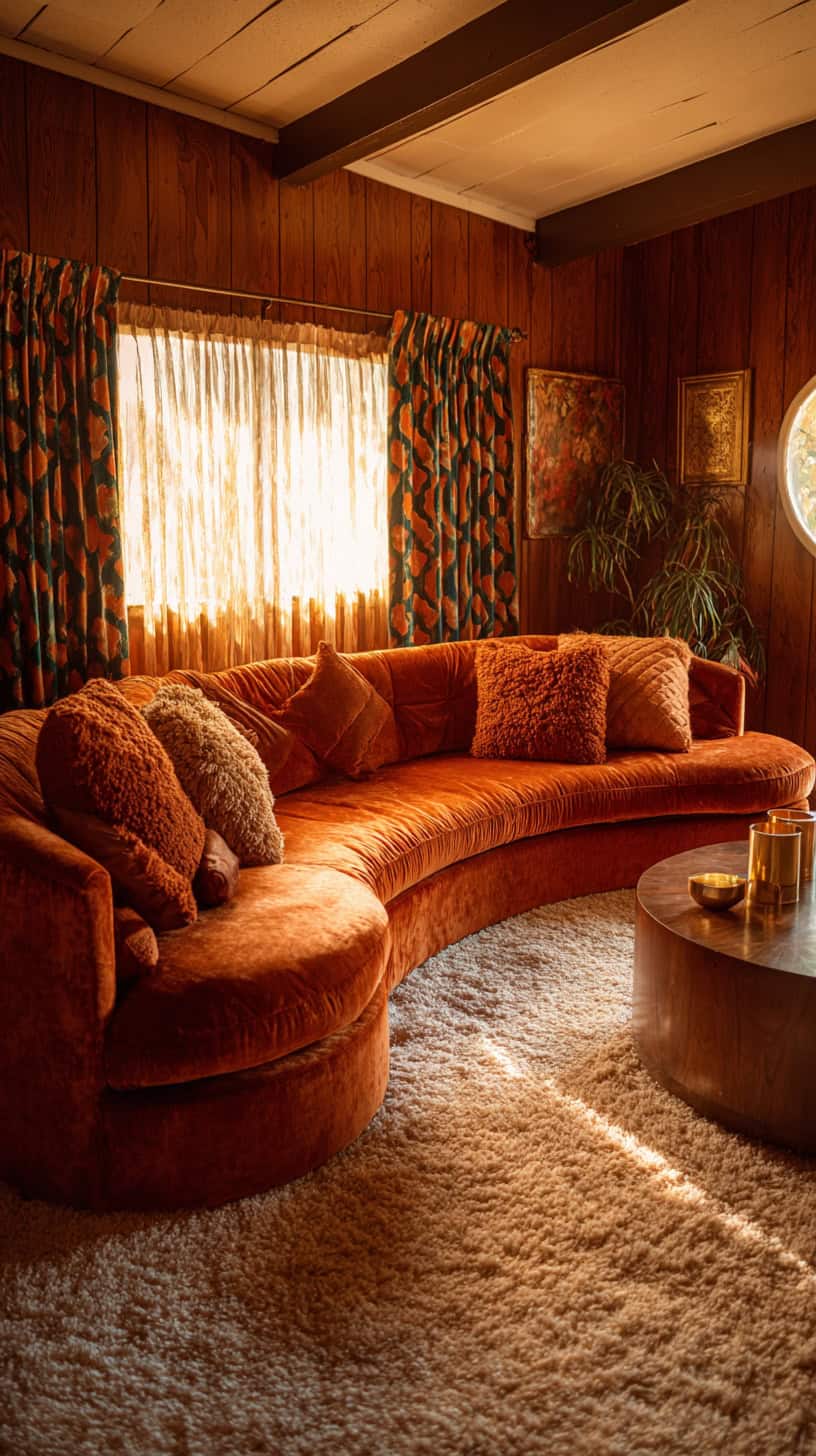
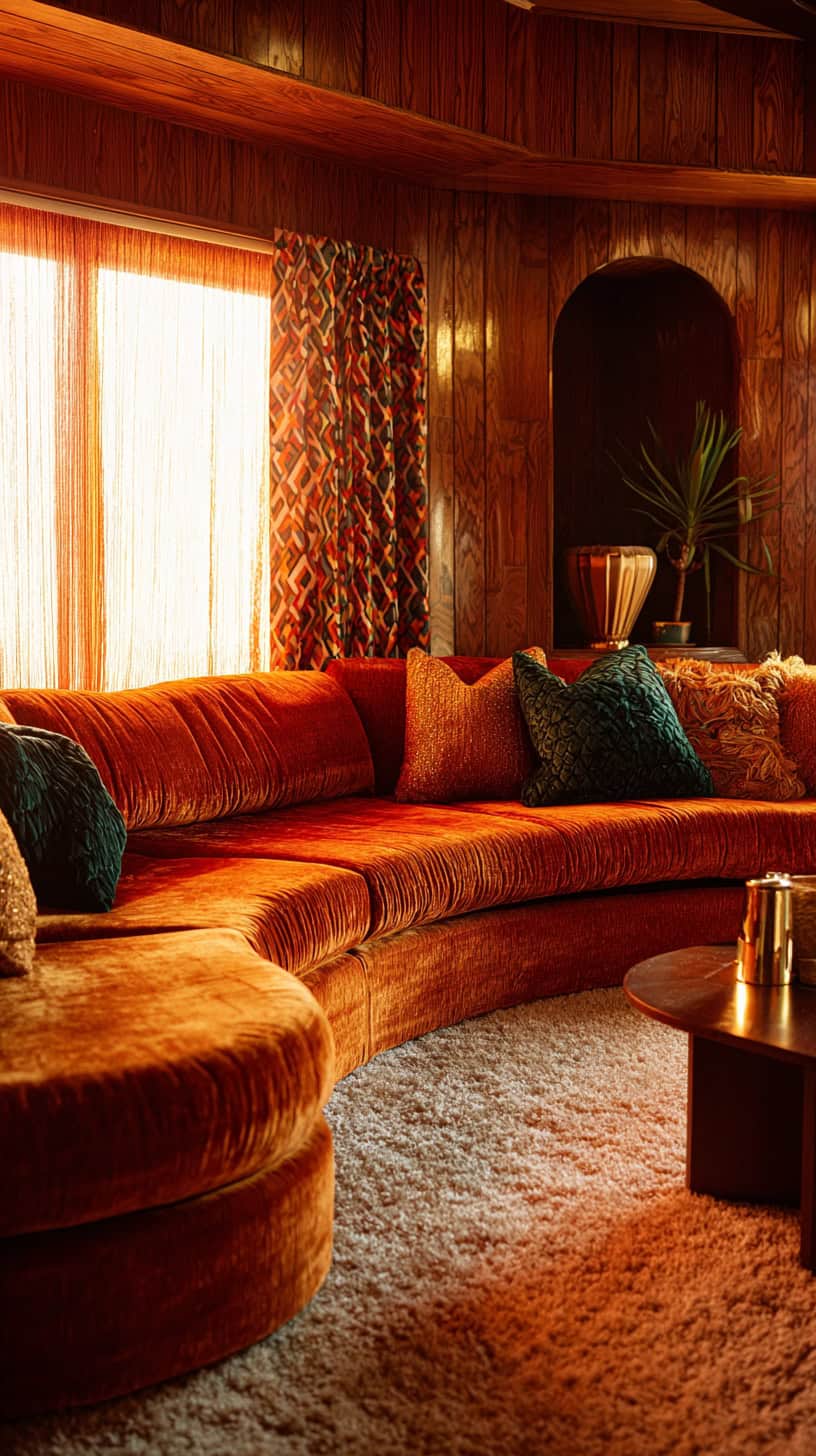

Let’s talk about why we can’t stop scrolling past those vintage 70s living room photos. In a world dominated by sterile minimalism and all-white everything, the 70s living room aesthetic feels like a breath of fresh, shag-carpeted air. We’re craving warmth, texture, and spaces that feel like an actual hug instead of a showroom.
The 1970s aesthetic home was all about self-expression and comfort without apology. People weren’t afraid of bold patterns, deep jewel tones, and furniture that curved in all the right places. Fast forward to 2026, and we’re exhausted from trying to make our homes look like nobody lives in them. The vintage 70s living room aesthetic gives us permission to be cozy, eclectic, and unapologetically us.
Plus, there’s a sustainability angle here that can’t be ignored. Embracing vintage room ideas means shopping secondhand, rescuing furniture from thrift stores, and giving pre-loved pieces a new life in your modern eclectic apartment. You’re not just decorating—you’re becoming part of a circular economy that your eco-conscious heart can feel good about.
Key Elements of a 70S Living Room: Colors, Textures & Curves
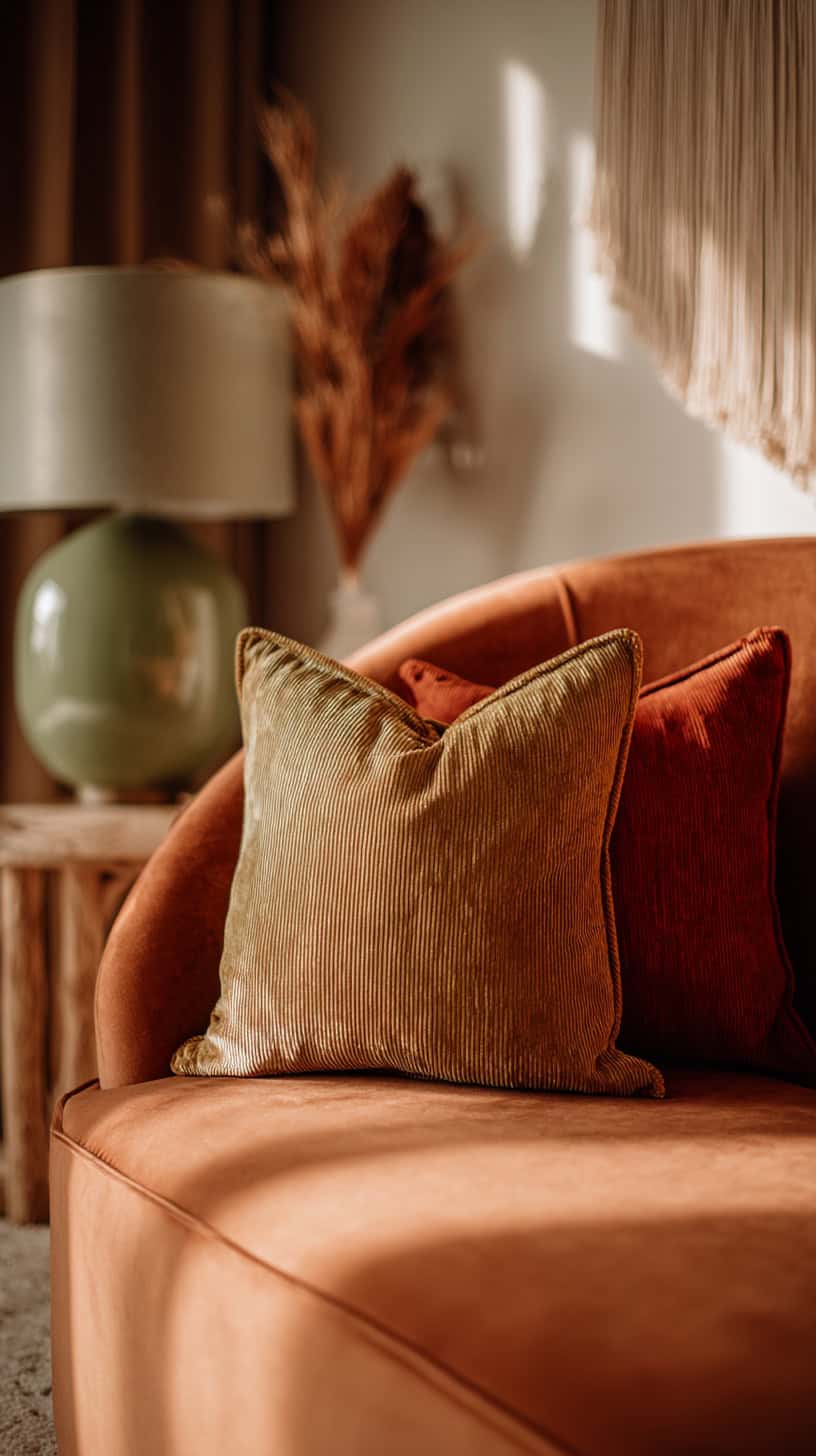
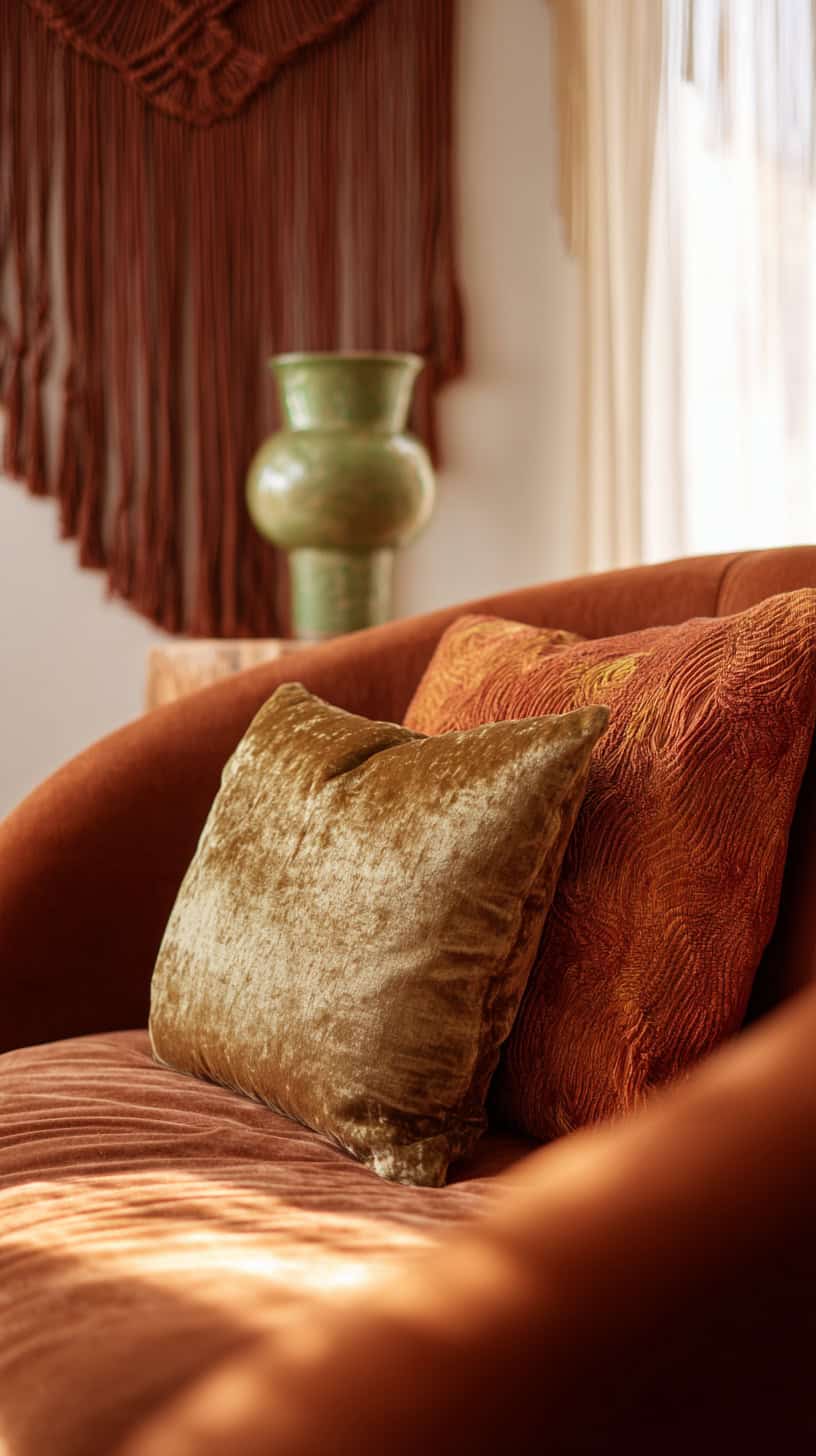
Creating an authentic 70s home vibe starts with understanding the holy trinity of retro design: color, texture, and those delicious curves. Let’s break down what made the decade’s interiors so unforgettable and how you can channel that energy in your own space.
The Color Palette: Think earthy, warm, and rich. We’re talking harvest gold, burnt orange, avocado green, chocolate brown, and that particular shade of rust that somehow works with everything. Don’t be afraid to layer these colors together—the 70s modern approach was maximalist in the best way. Accent with pops of teal, mustard yellow, or deep burgundy to keep things interesting.
Texture is Everything: The 70s living room aesthetic thrived on tactile experiences. Shag carpets (or rugs, if you’re not ready for wall-to-wall), velvet upholstery, macramé wall hangings, woven rattan, and nubby bouclé fabrics all played together beautifully. You can feel a room transform when you add a chunky knit throw over a smooth leather couch or place a glossy ceramic lamp on a rough wood side table.
Curves Over Corners: Goodbye, sharp edges! The modern retro decor movement embraces the rounded silhouettes that defined the era. Look for tulip chairs, mushroom lamps, arched floor mirrors, circular coffee tables, and sofas with rolled arms. These organic shapes soften a space and create that flowing, groovy atmosphere we associate with vintage living room ideas.
- Low-profile furniture that keeps sightlines open
- Statement lighting like globe pendants or arc floor lamps
- Wood paneling or wood-look accents (yes, really!)
- Geometric patterns mixed with organic florals
- Sunburst mirrors or clocks as wall art
Vintage Living Room Ideas from the 60S Living Room Era
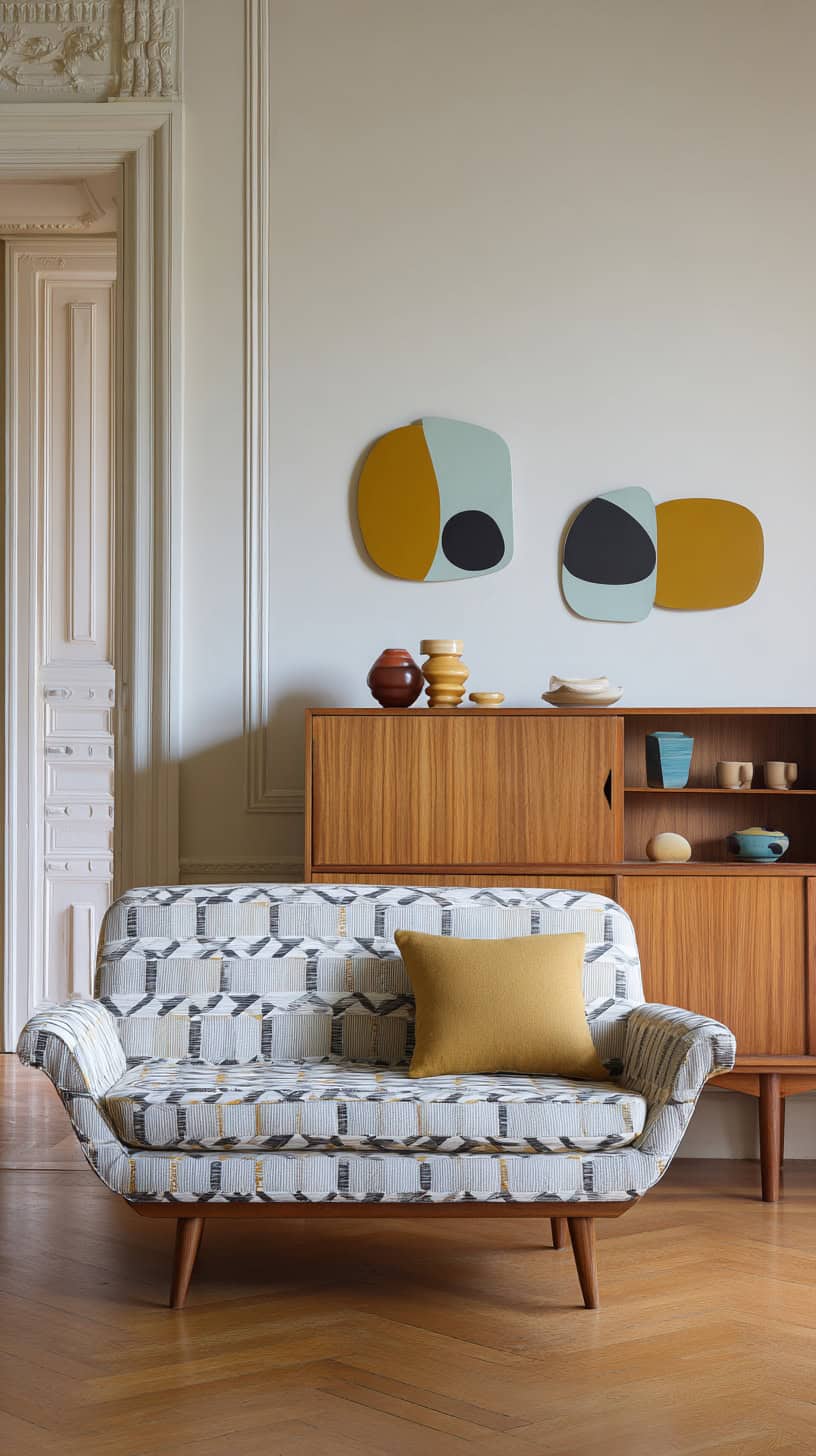
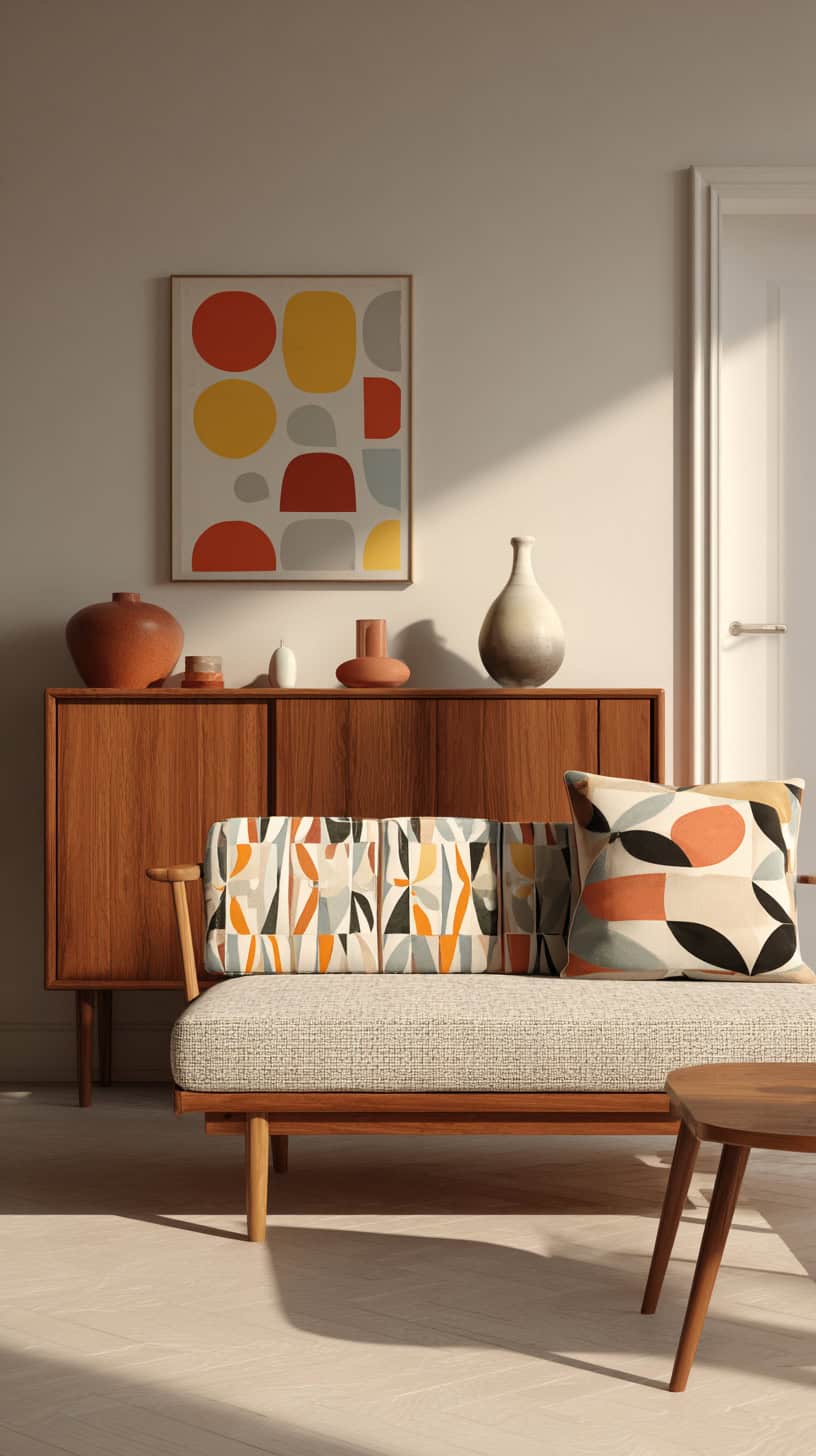
While the 70s get most of the retro glory, the 60s living room aesthetic laid the groundwork for everything groovy that followed. The sixties were about clean lines meeting bold experimentation—think Mad Men meets mod London.
The 60s living room typically featured sleeker silhouettes than its shaggy successor. Furniture sat on tapered legs, credenzas became the storage solution of choice, and Scandinavian design influences brought a lighter, airier feel to interiors. Color palettes leaned into aqua, tangerine, lime green, and plenty of white space to let statement pieces shine.
What’s brilliant about incorporating 60s living room elements into your retro living room setup is that they balance out the heavier 70s vibes. A streamlined teak credenza grounds a room full of plush velvet and pattern. A sleek Eames-style chair adds sophistication to all those warm, earthy tones. You can literally mix decades in your modern eclectic apartment and create something uniquely yours.
Key vintage room ideas from the 60s include atomic-age accessories, starburst wall clocks, kidney-shaped coffee tables, and plenty of teak or walnut wood furniture. If you find a vintage bar cart from this era, grab it immediately—they’re functional, fabulous, and make every Tuesday feel like cocktail hour.
Modern Retro Decor: Blending 70S Home with Today’s Trends
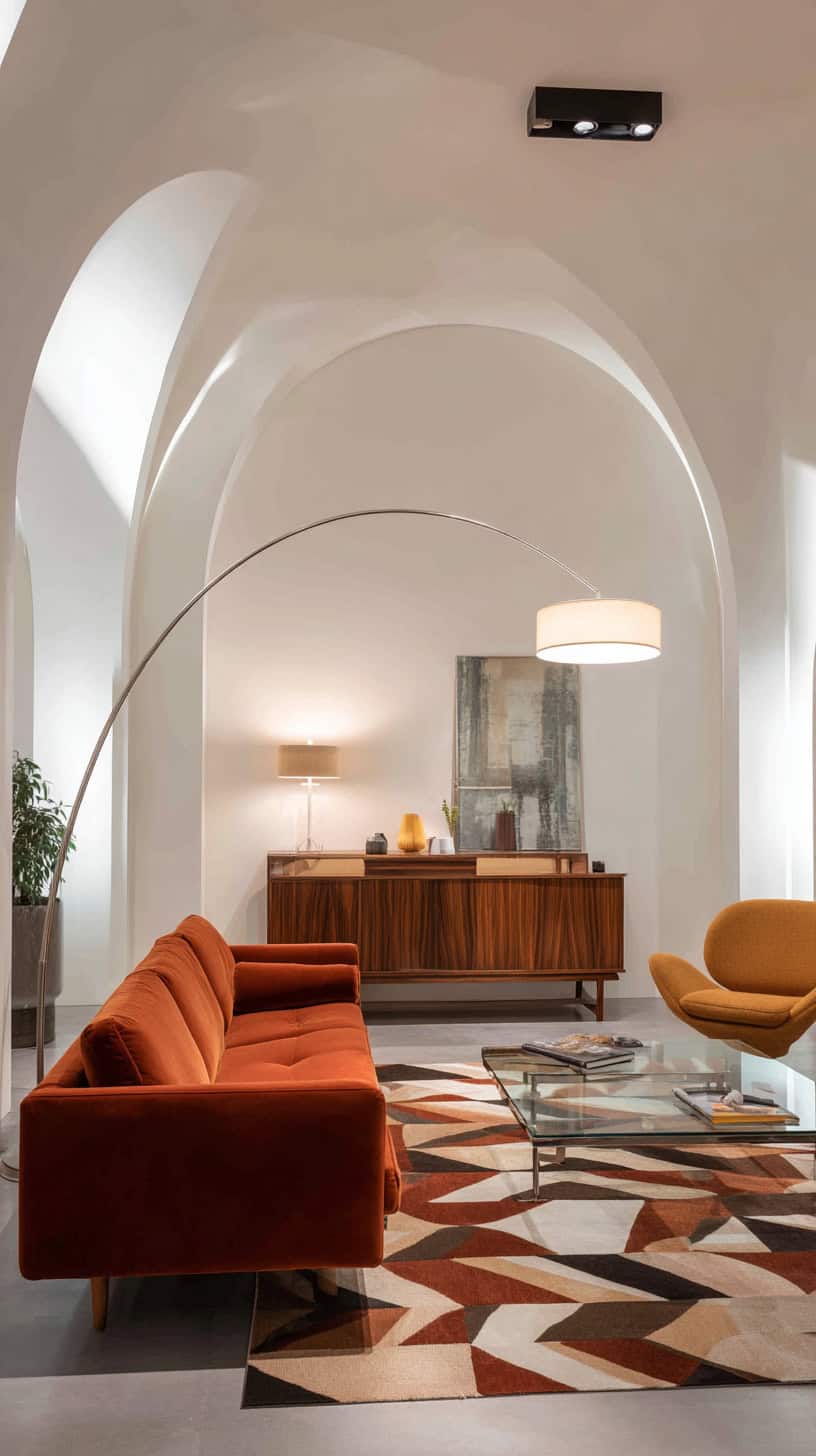
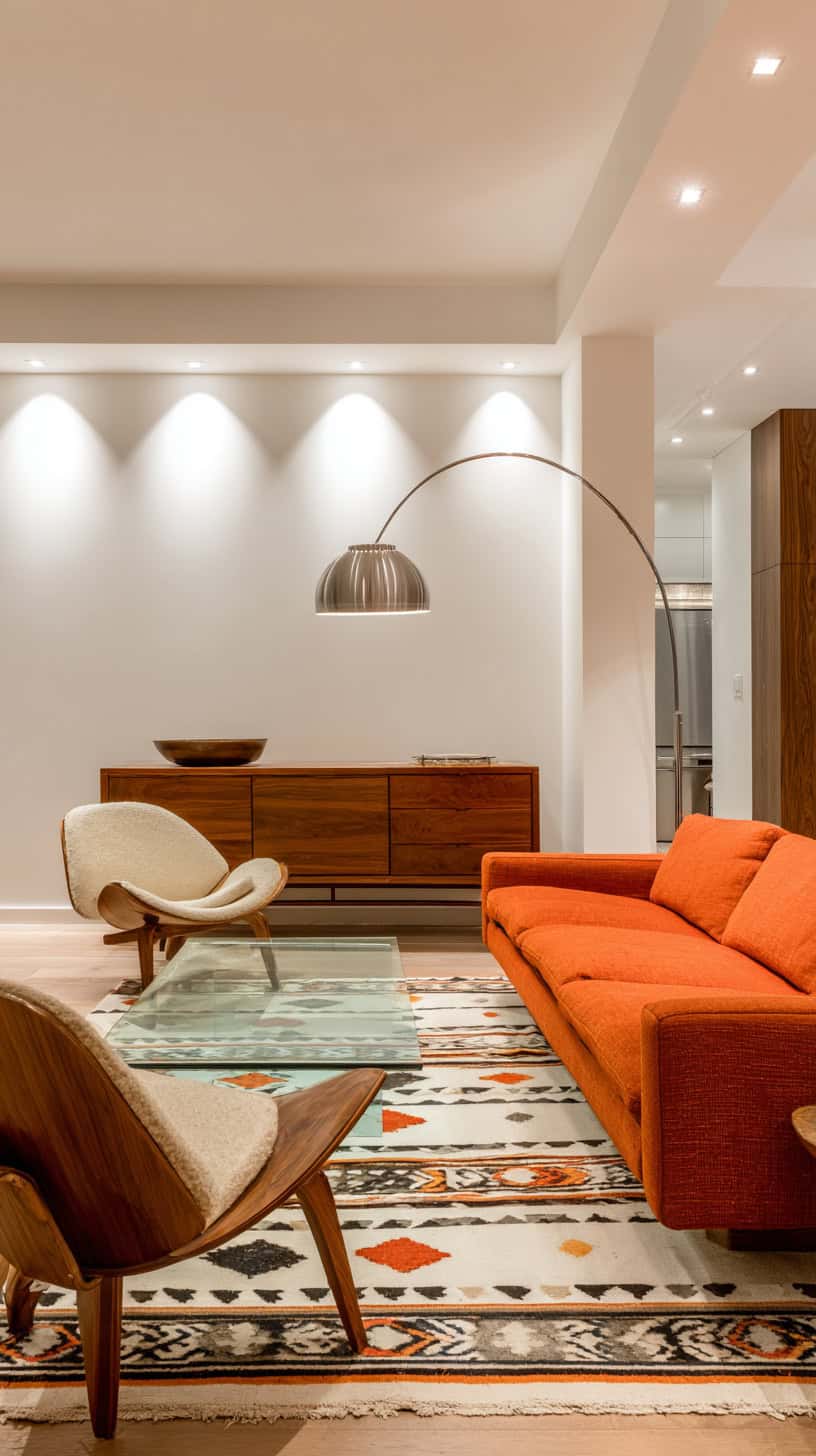
Here’s the thing about committing to a full-on time capsule: most of us still need our living rooms to function in 2026. That’s where modern retro decor comes in, letting you honor the past while keeping one foot firmly in the present.
Start by identifying which retro elements speak to you most. Maybe you’re obsessed with the color palette but need contemporary furniture proportions. Or perhaps you love vintage silhouettes but want them in updated fabrics that can handle real life (hello, performance velvet that actually repels the juice box your toddler just launched at it).
The beauty of 70s modern styling is that you get to cherry-pick the best of both worlds. Pair that authentic vintage credenza with modern gallery wall frames. Place a sleek contemporary sofa in a retro rust color and pile it with geometric throw pillows. Hang minimalist art in chunky, ornate vintage frames. The contrast is what makes it interesting.
Smart ways to blend eras:
- Use retro colors on modern furniture shapes
- Mix vintage finds with contemporary reproductions
- Keep tech visible but contained in retro-inspired media consoles
- Use modern lighting fixtures with vintage-style bulbs
- Layer vintage textiles over streamlined modern pieces
Remember, your modern eclectic apartment should tell your story. If that means a 60s credenza holding your gaming system under a contemporary abstract painting, surrounded by 70s-inspired seating—own it! The rules are meant to be bent, just like they were in the original era.
Post Modern Living Room: Edgy Twists on Vintage
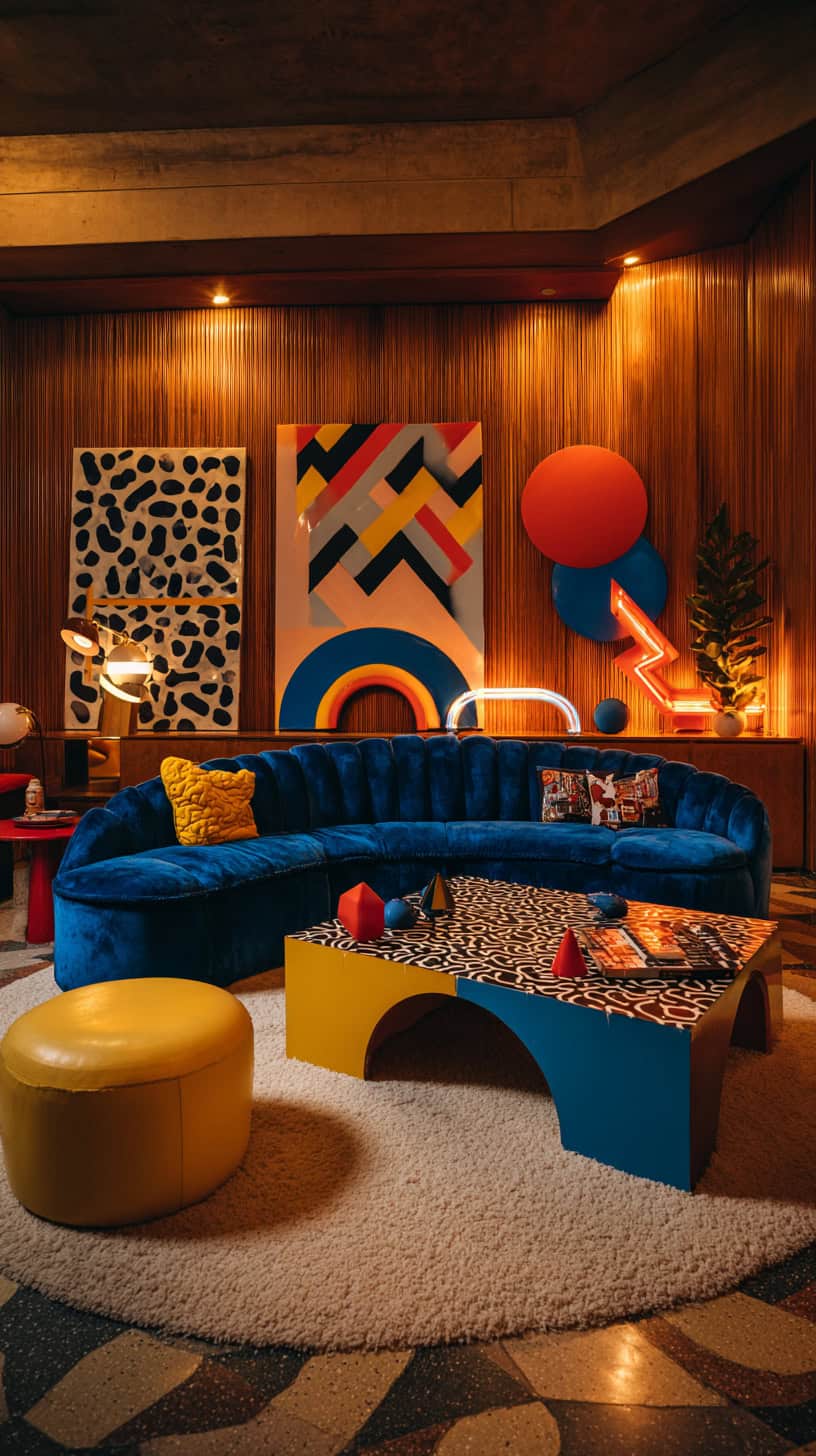
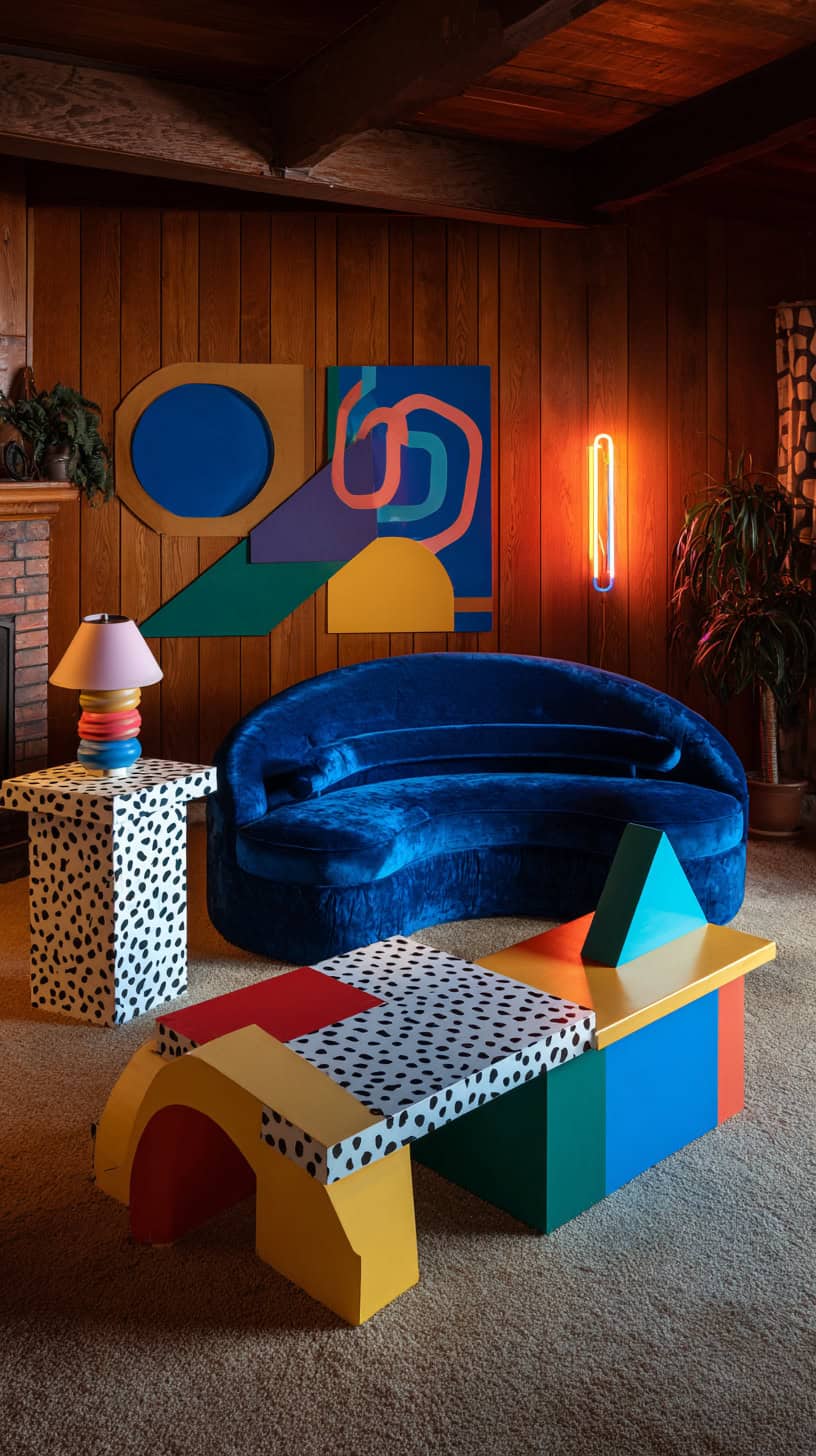
If straight-up retro feels a little too safe for your taste, let’s talk about the post modern living room approach. Postmodernism in interior design is all about playful subversion, unexpected combinations, and a healthy dose of “why not?”
A postmodern take on the retro living room setup means exaggerating certain elements, mixing patterns that shouldn’t work (but totally do), and adding contemporary or even futuristic pieces into your vintage mix. Think of a Memphis Group-inspired approach—bold geometric shapes, clashing patterns, and colors that make a statement louder than your mother-in-law’s opinions on your decorating choices.
This is where you can get really creative. Paint one wall in a graphic pattern using vintage color schemes. Mix a Victorian settee with a 70s mushroom lamp and an acrylic ghost chair. Hang an ornate gold mirror next to a neon sign. The post modern living room doesn’t whisper—it shouts, laughs, and occasionally winks at you from across the room.
The trick is maintaining intentionality. Random chaos is just messy, but curated eclecticism is art. Choose a unifying element—maybe it’s a color story, a particular era you keep referencing, or a specific vibe you’re channeling. That thread of consistency will keep your space from tipping into visual overwhelm.
Budget-Friendly Vintage Room Ideas You Can DIY Today
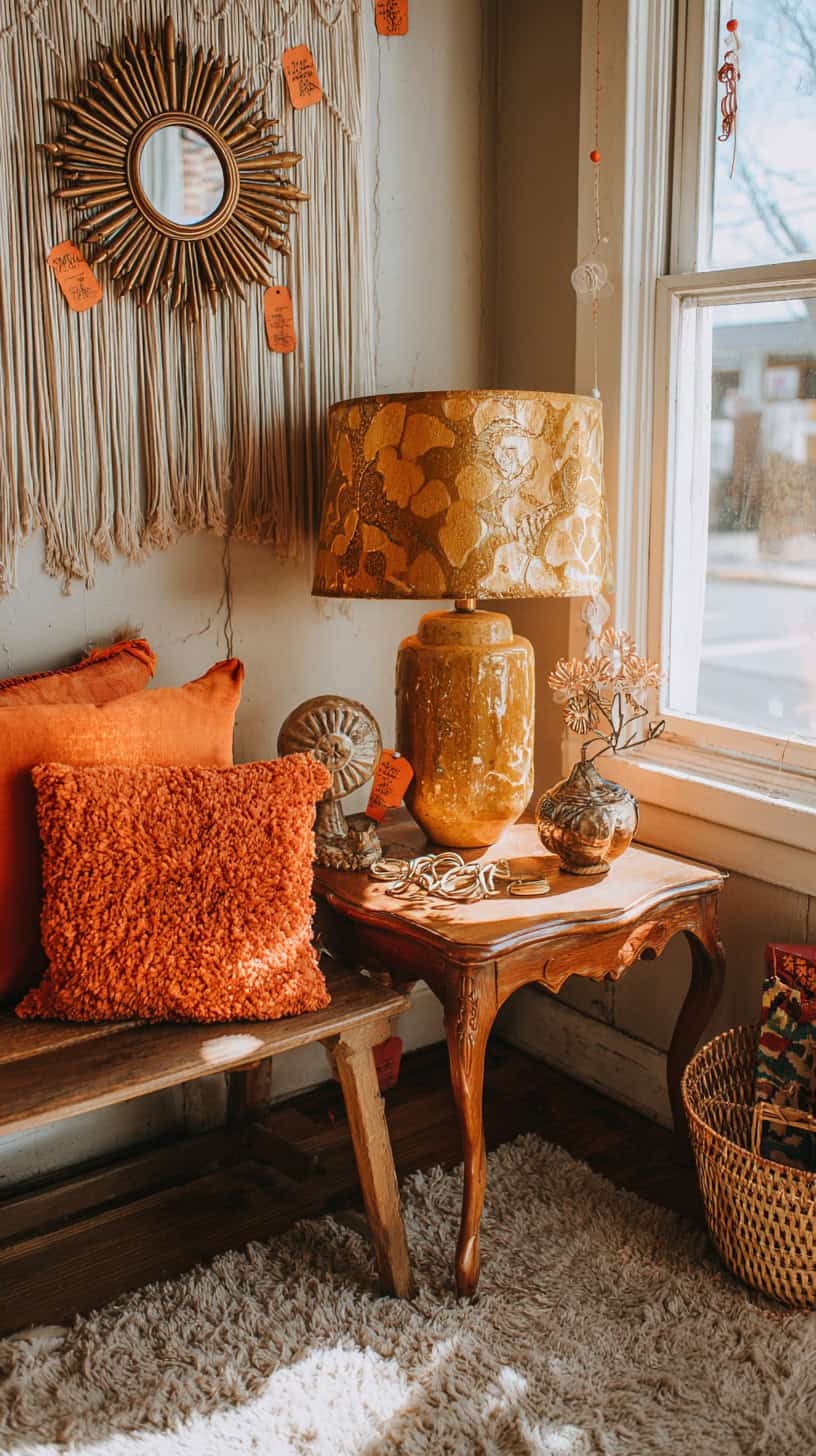
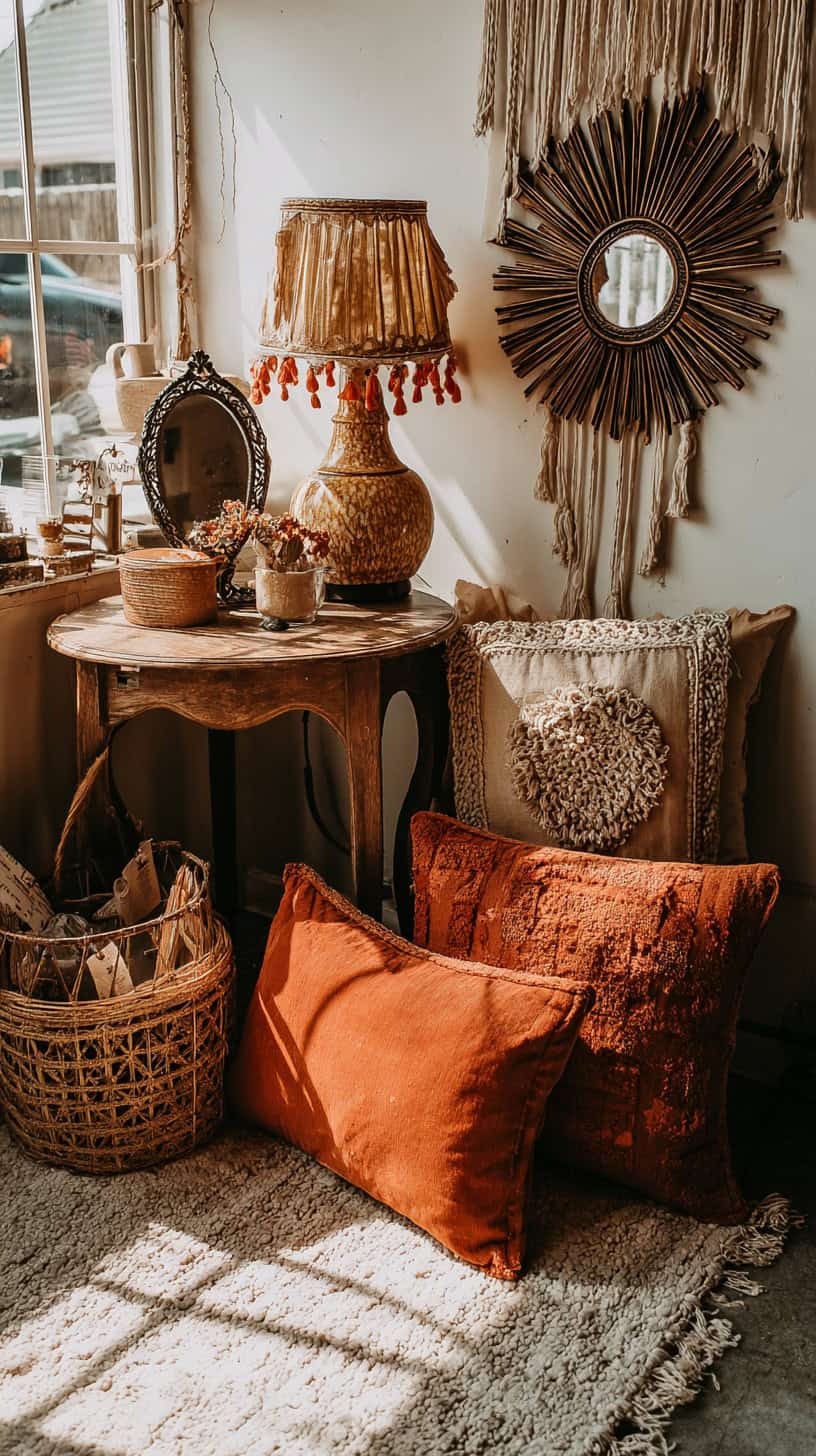
Let’s get real: authentic vintage pieces can cost a small fortune, and not everyone has the budget for a room full of designer mid-century finds. The good news? Creating a stunning retro living room setup doesn’t require a trust fund—just creativity and a willingness to hunt for treasures.
Thrifting and Estate Sales: This is where the magic happens. You can find incredible 70s home pieces at estate sales, thrift stores, and online marketplaces for a fraction of retail prices. That harvest gold lamp your teenager thinks is hideous? It’s $8 at Goodwill and perfect for your vintage living room ideas vision. Show up early to estate sales in older neighborhoods—that’s where the good stuff lives.
DIY Transformations: You can make your own retro magic with some basic supplies. Reupholster a tired chair in burnt orange velvet (there are tons of tutorials online, and it’s easier than you think). Paint a basic mirror frame with a sunburst design. Create macramé wall hangings with YouTube as your teacher. Refinish a plain wooden coffee table in that perfect walnut stain. The labor you put in makes the piece even more special.
Budget-Friendly Shortcuts:
- Look for new furniture with retro silhouettes at affordable retailers
- Use peel-and-stick wallpaper in vintage patterns for instant impact
- Thrift your accessories and artwork—frames, vases, and decorative objects add up fast at full retail
- Shop end-of-season sales for textiles in retro colors
- Mix one statement vintage piece with budget-friendly supporting pieces
- Create gallery walls with vintage finds from flea markets
The 70s living room aesthetic was partly born from people being resourceful and creative with what they had. Honor that spirit by being scrappy, patient, and willing to see potential where others see junk. That’s not just budget-friendly—it’s the authentic retro experience.
Retro Setup Tips for Real Mom Life
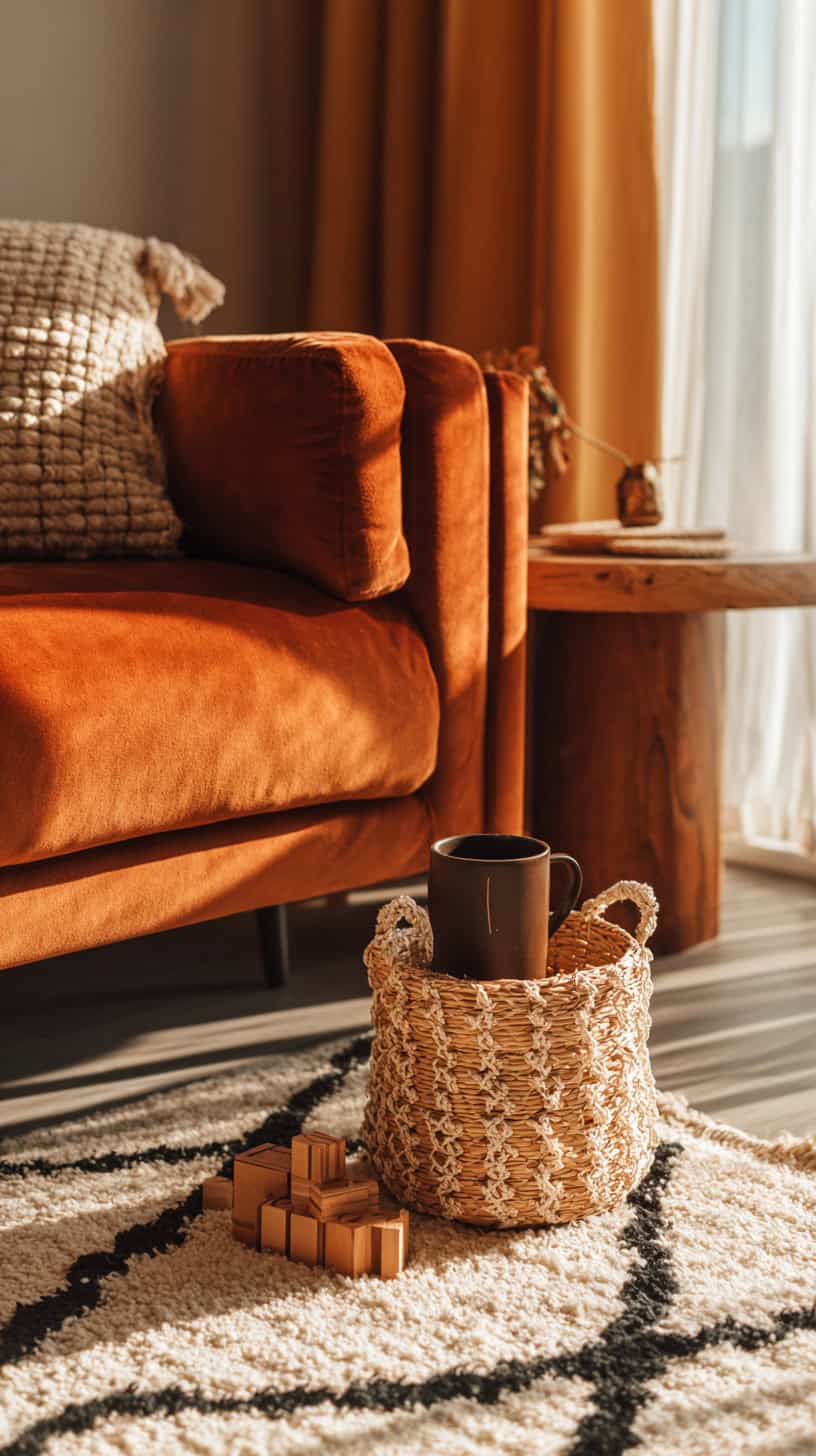
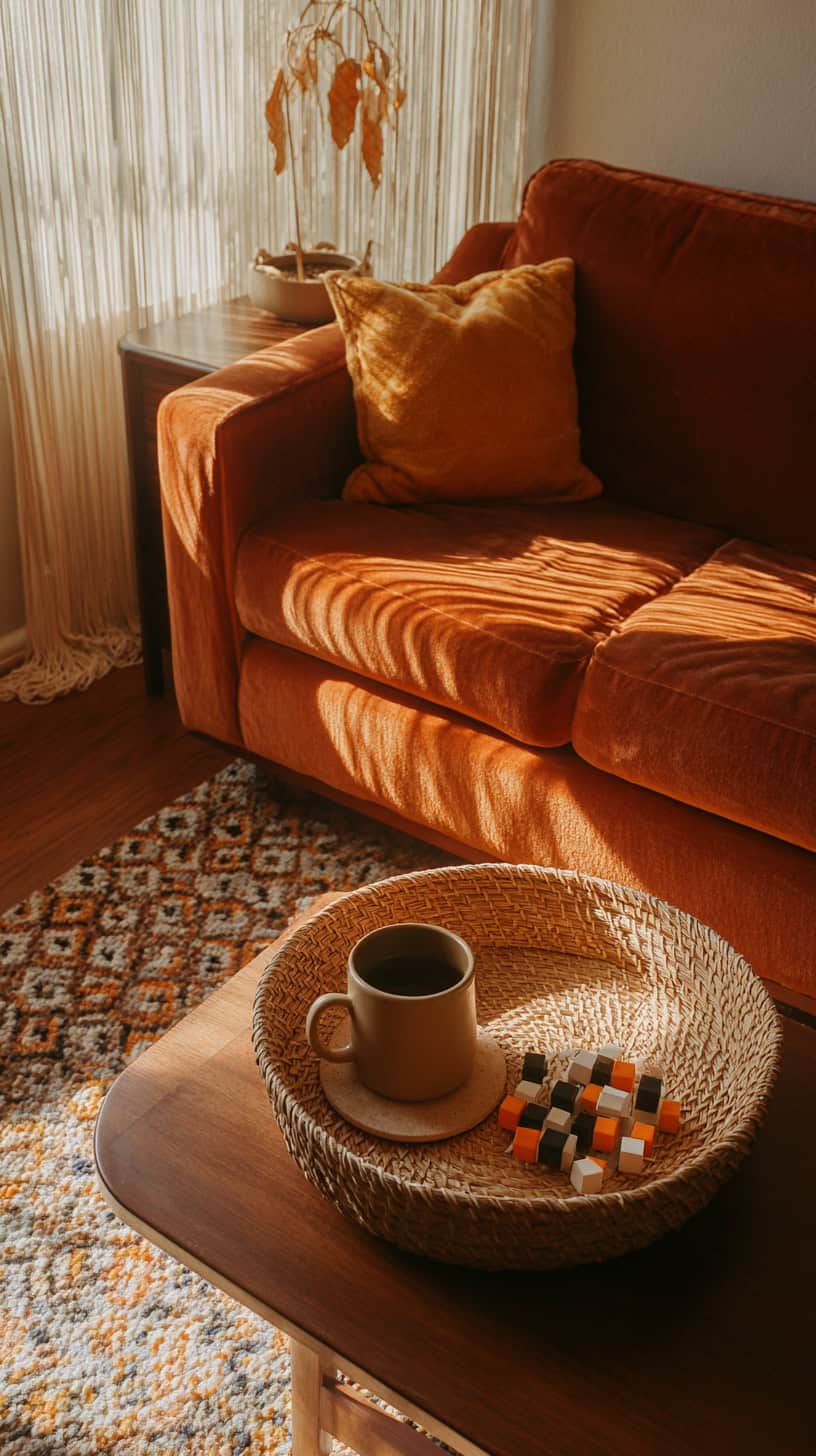
Here’s what the design magazines don’t tell you: creating a beautiful retro living room setup while actually living life—especially with kids—requires strategy. But it’s absolutely possible, and you don’t have to sacrifice style for functionality.
Choose Performance Fabrics: That gorgeous velvet you’re eyeing? Make sure it’s performance velvet. Modern fabric technology means you can have the vintage 70s living room look without the vintage staining nightmares. Same goes for those earthy-toned rugs—look for machine-washable options or indoor-outdoor rugs in retro patterns and colors.
Storage with Style: The vintage credenza is your best friend. It hides all the random life stuff (art supplies, board games, that random collection of rocks your kid insists on keeping) while looking absolutely gorgeous. Woven baskets in various sizes continue the natural texture vibe while containing chaos. A vintage bar cart can double as craft supply storage—no judgment here.
Durable Vintage Room Ideas: Focus your splurge on pieces that can take a beating. Solid wood furniture from the 60s and 70s was built to last and can handle your real life. That vintage coffee table? It’s survived fifty years already—your family’s daily use won’t phase it. Save the delicate stuff for higher shelves or adult-only spaces.
Don’t apologize for the fact that you actually live in your home. The best modern eclectic apartment or house is one that’s truly lived in, loved, and functional. That might mean your perfect 1970s aesthetic home includes a designated Lego-building corner or a vintage credenza topped with family photos instead of that pristine vignette you pinned.
Real-Life Styling Tips:
- Use trays to corral remotes and daily-use items—choose vintage brass or ceramic ones
- Incorporate plenty of washable throw pillows in retro patterns
- Choose darker retro colors that hide everyday wear better than lighter shades
- Create kid-friendly zones within your retro design scheme
- Embrace imperfection—vintage spaces had character and so should yours
The magic of vintage living room ideas is that they celebrate warmth, comfort, and personality—all things that matter way more than perfection. Your space should welcome people in, invite them to sit (actually sit, not perch nervously), and make them feel like they’ve entered somewhere special. Whether you go full 70s home vibes or create your own modern retro decor mashup, make it yours. Style it for the life you actually live, fill it with pieces that make you smile, and don’t forget to dance across that shag rug every once in a while. That’s what the 70s would have wanted.
This post may contain affiliate links. Read the full disclosure here.